
Skiing Spitsbergen, when the sun never sets

In late May, at 78° north, the sun swings above the horizon without ever touching it. You ski in the afternoon, you ski in the evening, and you would ski through the night if your legs held out. That is what a ski and sail expedition in Svalbard comes down to: skiing Spitsbergen from the deck of a boat, where the mountains fall straight into the sea and a schooner carries you to the foot of faces no road will ever reach. Here is how one of these voyages unfolds, and what to know before you slip the mooring.
An island with almost no roads
Svalbard sits on the map as a handful of islands flung between Norway and the North Pole. Spitsbergen is the largest, the only one properly inhabited, and it comes down to a single harbour: Longyearbyen. One road runs out a few kilometres past the town. After that there is nothing to ski but snow, glaciers and the cold water of the fjords.
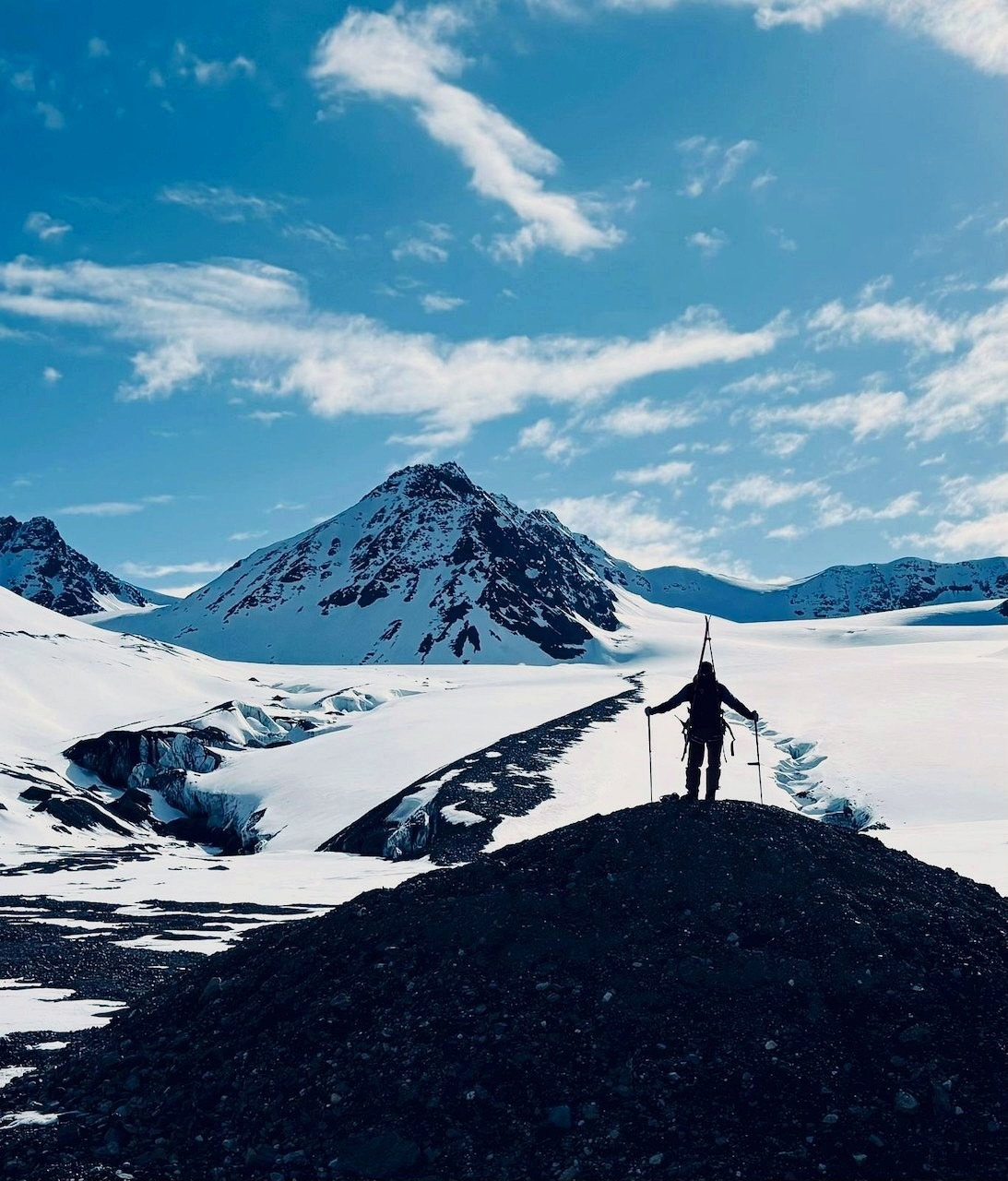
That is what makes the archipelago so unusual to ski. No lift, no piste, not even a footpath — the only way to reach the mountains is to come by sea. You board a sailing boat that becomes a floating base camp, and each morning drops you below a different summit. You skin up from the beach, cross to the far side of a ridge, and the descent runs all the way down to the shore where the zodiac waits. Few places on earth offer this much untracked skiing terrain, and fewer still this far north.

Why late May, and not before
The ski season in Svalbard is short, and you read it in the light. From late April to mid-August the sun never sets: this is the midnight sun, a single day that lasts for months. The snow, though, keeps a slightly different calendar.
Too early in the spring and the cold still holds the winter snow hard, and the days, long as they are, stay raw. By late May the balance tips. The sun has warmed enough to turn the spring snow without wrecking it, the inner fjords shed their sea ice week by week, and light that never fades gives you ski days with no clock on them. You set off when the snow is good and come back when hunger wins out over the urge to keep going — sometimes at hours that no longer make much sense.
This is the window PowderWeGo holds for Spitsbergen: the last fortnight of May, when the far north brings snow, light and access to the fjords together at the same time.
IN BRIEF — the Svalbard ski and sail expedition Season · the last fortnight of May Latitude · 78° north, under the midnight sun Level · strong off-piste skier, self-reliant, comfortable over several days Ascent · 3 to 6 hours a day on skins, 600 to 1,200 m of climbing Accommodation · aboard the schooner Noorderlicht, shared cabins Group · twelve skiers at most, four mountain professionals Safety · airbag pack, transceiver, shovel & probe, bear watch, daily briefing Getting there · Longyearbyen (flights via Oslo or Tromsø)
How a day unfolds
The rhythm follows the snow and the weather, never a watch. A typical day looks like this.
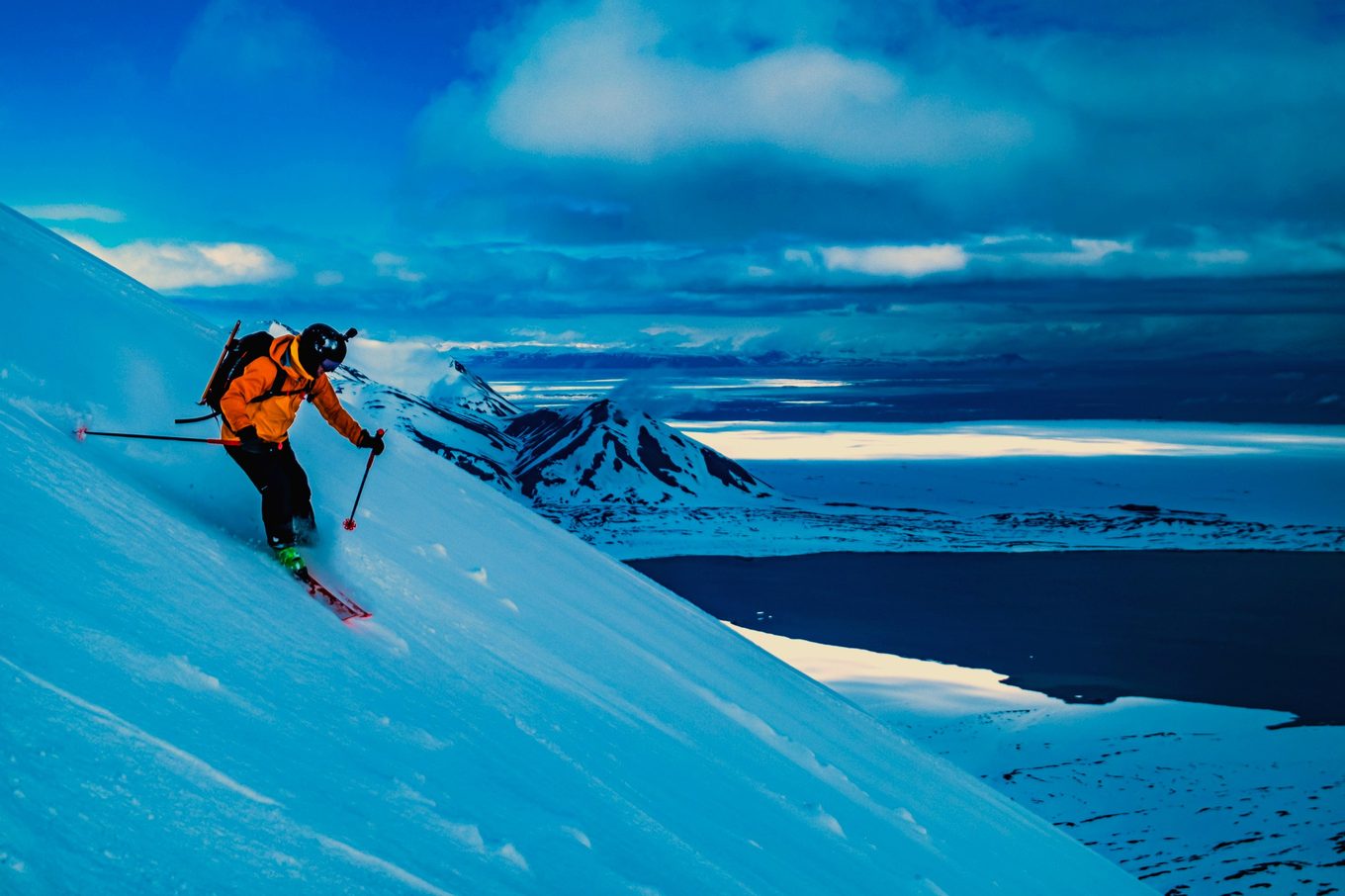
You wake to a briefing on deck: snow conditions, wind, the line chosen for the day. The zodiac then sets the group down at the foot of the mountain, on a shingle beach or a stretch of shore still gripped by ice. Then the climb on skins begins, three to six hours towards a summit that is usually untracked, with 600 to 1,200 metres of ascent depending on the terrain and the group. At the top the view carries over a jumble of peaks and blue fjords to the horizon. Then the descent drops towards the sea on spring snow that has softened all day, sometimes right back to the zodiac with your tips in the water.
In the evening the schooner weighs anchor and moves to the next mooring while you eat. Outside, the light has not shifted — and nothing stops you clipping back in after dinner if the mood takes you. Plenty do, at least once, just to ski at an hour when everywhere else in the world it would be pitch dark.
Skiing in polar bear country
Spitsbergen is polar bear country, and that shapes the way you ski here. It is a fact of the ground, managed with clear rules rather than fear.
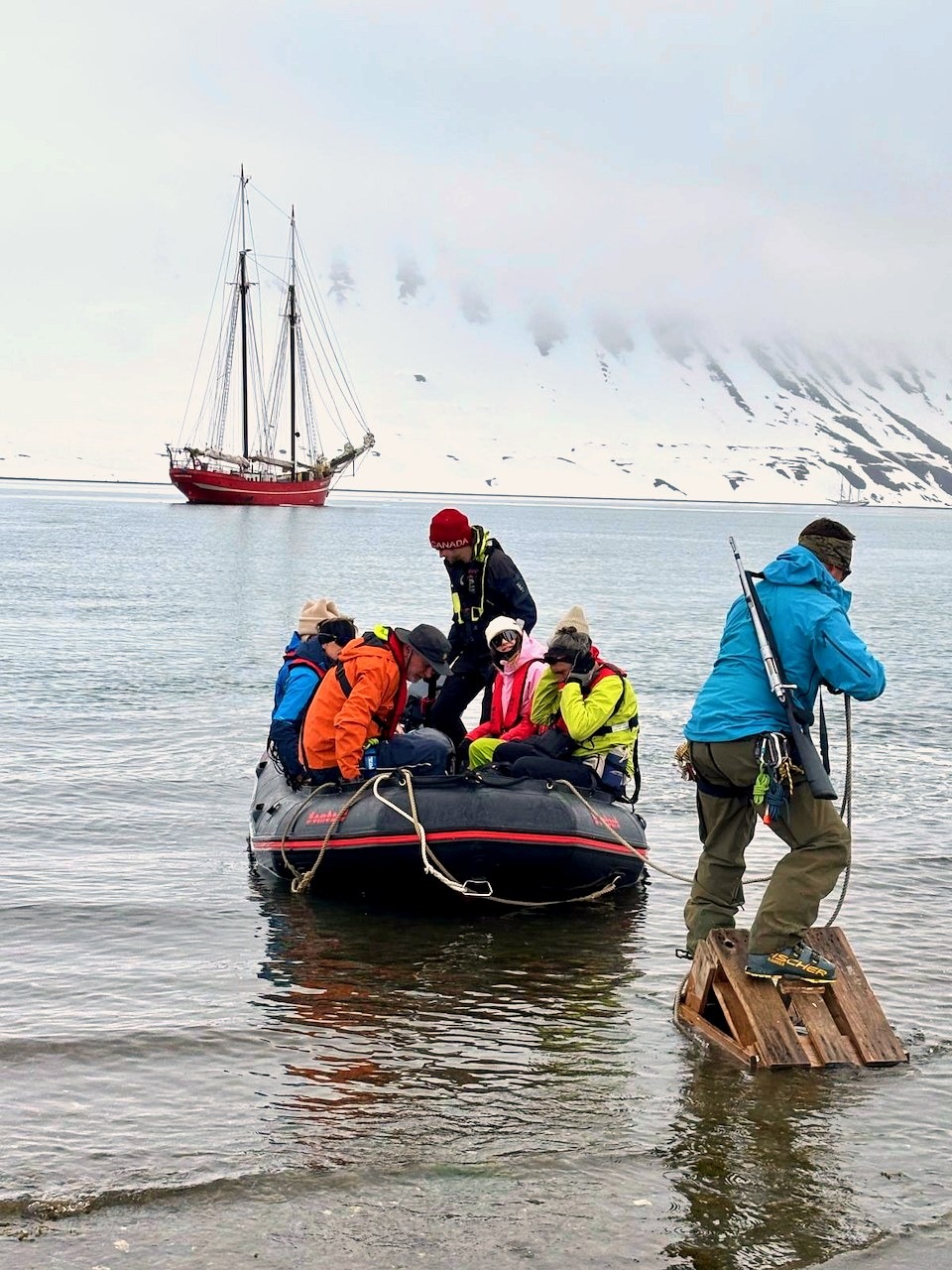
Beyond Longyearbyen, Svalbard regulations require you to carry a means of protection against bears. The guide carries a rifle — not to use it, but so as never to have to: the first line of defence stays vigilance, reading the ground, and a flare pistol to deter. On board and ashore a watch is kept, and the day's route always factors this in. You do not ski Spitsbergen the way you ski the Alps; you ski to the rhythm of a place that belongs first to its wildlife.
Aboard the Noorderlicht
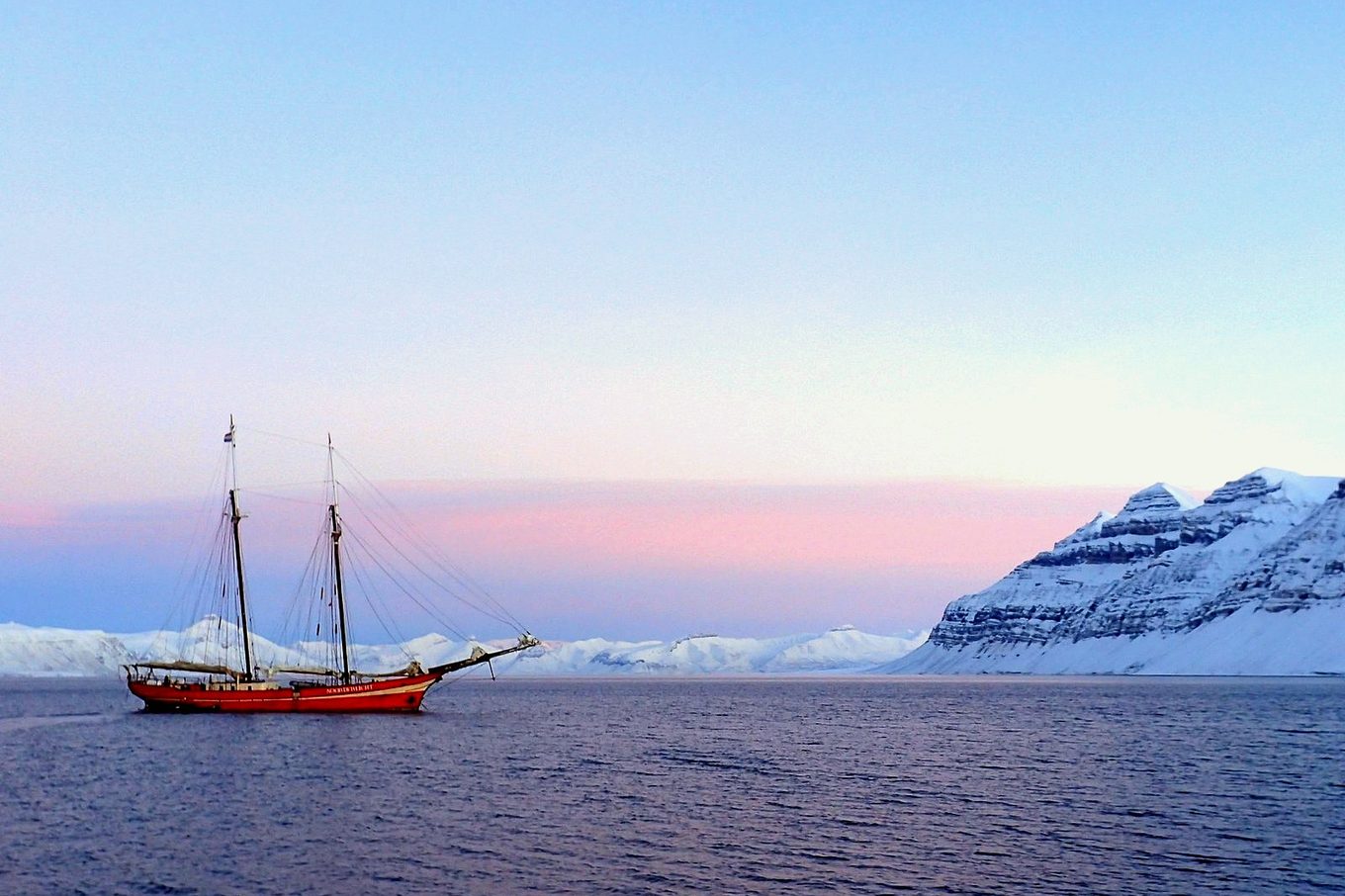
The boat is no incidental comfort: it is the base camp, and its draught decides which fjords you can anchor in. In Spitsbergen, PowderWeGo charters the Noorderlicht, a two-masted schooner launched in 1910, steel hull and reinforced bow, built to thread the ice of Svalbard for well over a century.
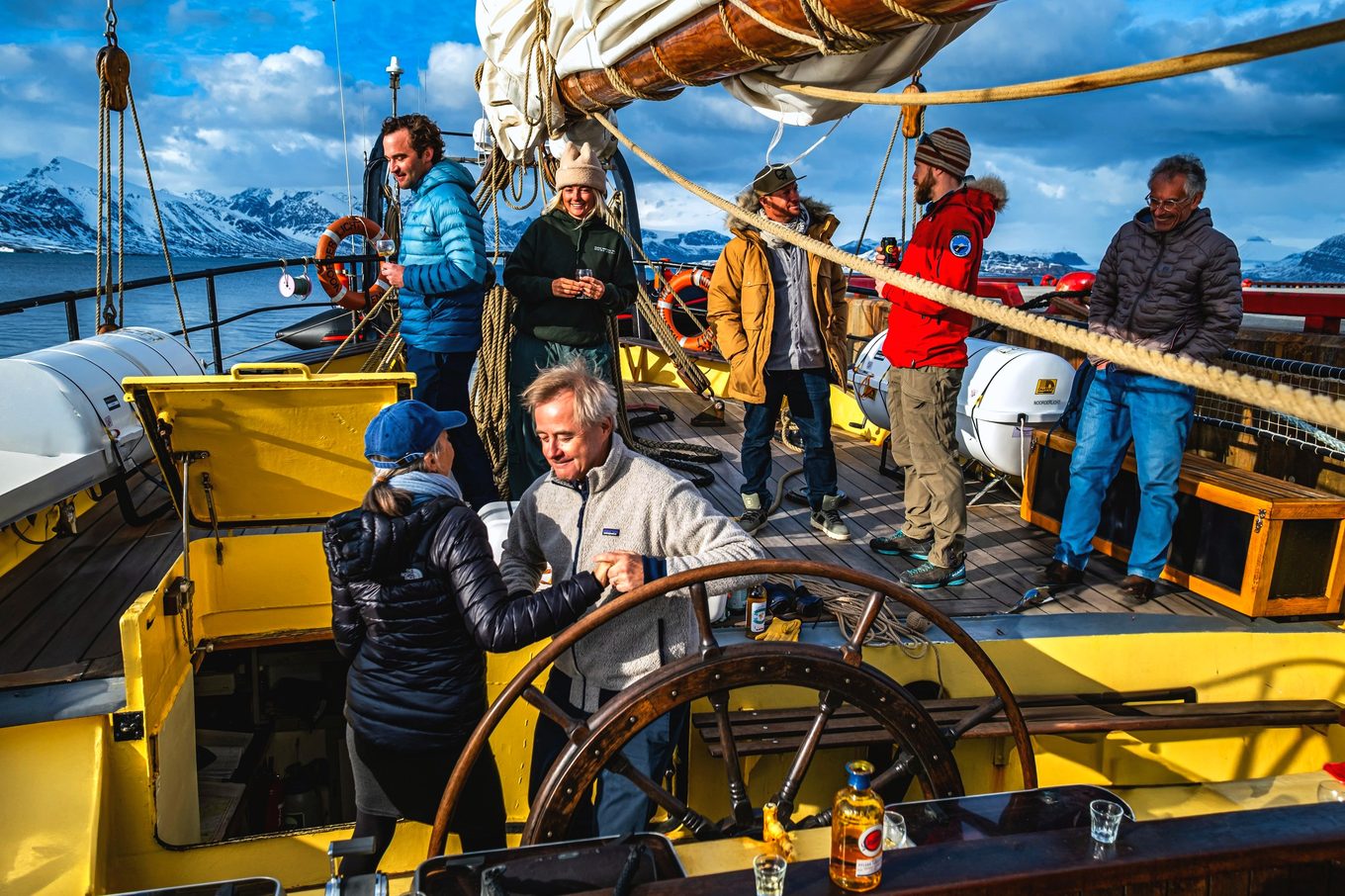
Twelve skiers aboard, four mountain professionals, a crew that knows these waters, and shared cabins where you sleep at anchor, rocked by the wash of the fjord. The deck serves as viewing terrace, skin room and chart table. You live outside as much as in, because at this season the outside never goes dark.
Who this expedition is for
Ski and sail in Spitsbergen asks for a strong off-piste skier, self-reliant and able to string days together. Not a racer: someone who skis changing snow cleanly, who holds three to six hours of climbing several days running, and who values the remoteness and the silence as much as the vertical.
Stamina and ease on the descent count for more than raw performance. Skinning itself is quick to learn. As for seasickness, it worries people more than it troubles them: the sailing is done mostly at night, at anchor or along sheltered coasts, and tender stomachs tend to settle by the first night.
Those who come back from Spitsbergen rarely talk about summits. They talk about the light that never falls, the silence after the climb, a fjord crossed without meeting another soul. That is what you come here for, and what you find nowhere else.
A word from the guide What holds me in Spitsbergen is not the difficulty: it is the moment we cut the zodiac's engines below a face no one has skied this season, and all that is left is the sound of our skins on the snow. We move to the rhythm of the mountain and the sea, never the other way round, and if the day is not right, we turn back without argument. We will be alongside you, from the first exchange to the last descent.
FAQ — skiing Spitsbergen
Do you need to know how to sail to ski Spitsbergen?
No. The crew handles the boat entirely; the skiers have no manoeuvres to learn. You come aboard to ski, not to sail.
When is the best time to ski Spitsbergen?
The last fortnight of May. The spring snow has turned without being wrecked, the fjords are shedding their sea ice, and the midnight sun gives you ski days with no end to them.
Are there polar bears?
Yes, Svalbard is polar bear country. Regulations require a means of protection beyond Longyearbyen: the guide carries a rifle and a watch is kept at all times. Vigilance and route choice remain the first safeguard.
What ski level do you need?
You need to be a strong off-piste skier, self-reliant and at ease on changing snow, able to string together 3 to 6 hours of climbing several days running. You do not need to be a racer.
How do you get to Spitsbergen?
You reach Longyearbyen by air, usually via Oslo or Tromsø. That is where you board the schooner for the whole of the expedition.
Ski Spitsbergen with us
The ski and sail expedition in Spitsbergen runs in late May, on the Noorderlicht, under the midnight sun. The dates and the programme are built with you.
Drawn to ski and sail, but Spitsbergen feels a long way off for a first time? Two other voyages open the same door, at other latitudes.
Ski & sail in Greenland — the Fjord of Eternity, in spring. → See the Greenland voyage >
Ski touring in the Lofoten — summits that fall into the sea, from March. → See the Lofoten voyage >
Further reading: the framework for Arctic expedition operations from AECO and the Norwegian avalanche bulletin Varsom.
Also worth reading
Ski and sail, how it works — the idea explained from A to Z
A guide to ski touring in the Lofoten
Ski and sail in Greenland, along the Fjord of Eternity


Comments