
Backcountry skiing Japan: Hokkaido's light, deep powder

Your first morning in Niseko, the overnight snow is knee-deep. You drop in between the birches, your skis come up to the surface on their own and the snow sprays over your shoulder. By the third turn you're laughing into your goggles.
That moment is why people go backcountry skiing in Japan. Before anyone books, though, the same question comes up every season: "Am I good enough?" If you've already had fun in powder, the answer is yes.

Cold, light snow that blows in from Siberia
In winter, the wind from Siberia crosses the Sea of Japan and reaches Hokkaido loaded with snow. Niseko gets around fifteen meters a season, and January is the heart of it. In the trees, the powder stays cold and light for several days running. It holds your skis up, and one turn runs into the next.
Here, most of the skiing is in the forest. The birches grow well apart and leave wide gaps between the trunks. You go from groomed runs to the trees, then out onto open, untracked slopes, depending on the day's snow and what the group feels like.

A day on the Hokkaido ski safari
Each morning, the minibus takes the group to whichever side of the mountain caught the most snow overnight. You ride the lifts, then put your skins on and head a little farther out, to slopes nobody has touched. The climbs come to around 800 meters of vertical. The rest of the day is downhill.
Our groups have six skiers per guide at most. The day starts with a briefing, then the team picks the slopes based on the snow and the risk, and knows when to turn back. You ski with instructors who specialize in off-piste and ski touring, or with mountain guides. An airbag pack, beacon, shovel and probe are loaned to you if you don't have your own.
The skiing level Japan calls for
On our Japan backcountry skiing page, the trip is rated 3 out of 5 for technique and 2 out of 5 for fitness. In practice, you're comfortable off-piste, you've skied deep snow before and you enjoy it. Good general fitness is enough, and the climbing stays moderate.
If you already ski off-piste, in the Alps or closer to home, and you know your way around skins, you're good enough. And if a big powder day has been on your mind for years, this is where you'll find it.
If you've hardly ever left the groomed runs, save Japan for the following winter. A few off-piste days near home with an instructor are often enough to get the hang of it, and you'll land in Hokkaido ready to make the most of it.
To see where you stand beyond Japan, our article on the level you need for an adventure ski trip sets out the full scale.
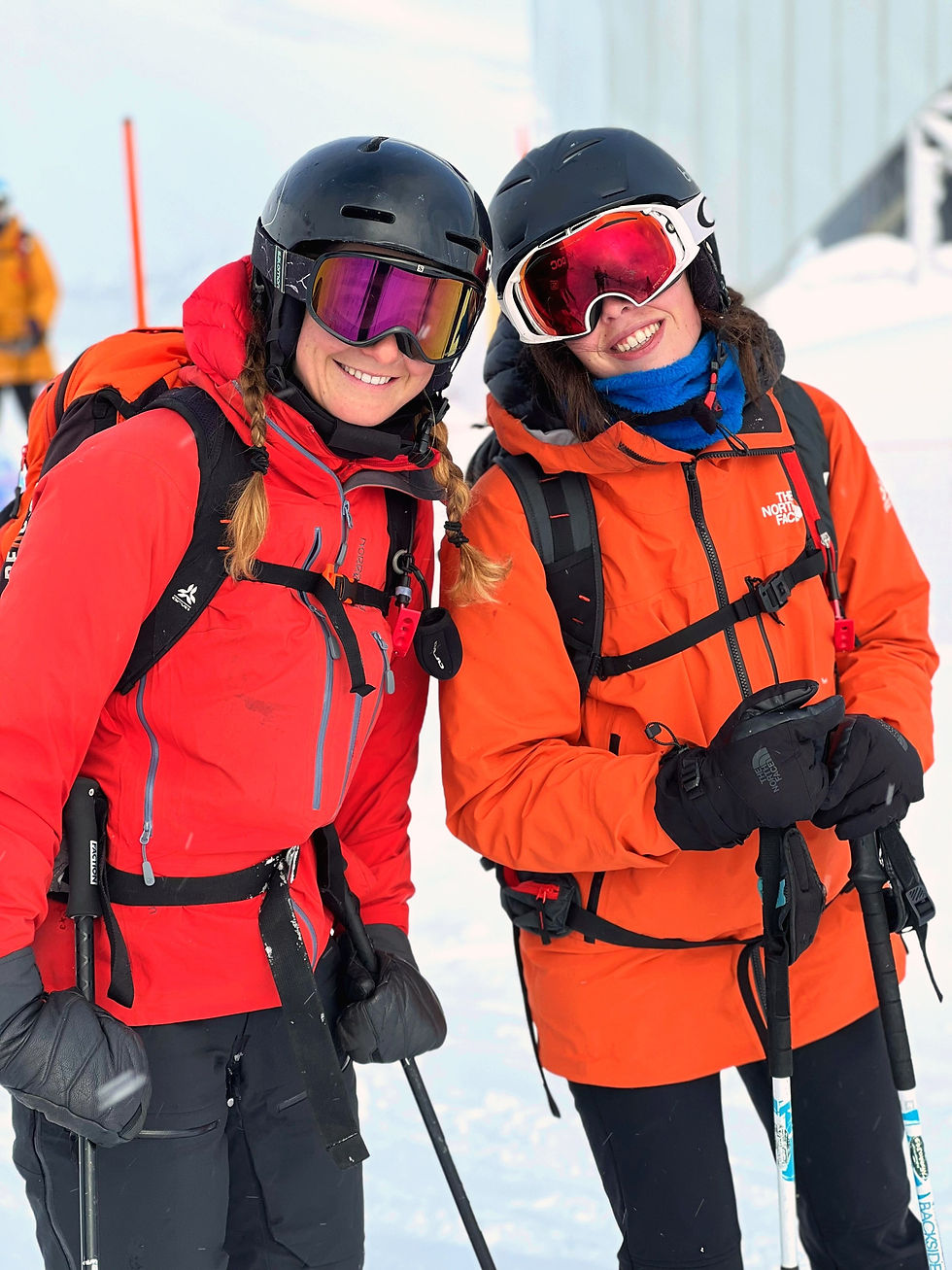
Go wide, and the rest follows
Bring touring skis at least 100 mm underfoot, 110 mm if you can: in this snow a wide ski floats and turns without a fight. Skins, ski crampons and a helmet are yours to bring. The details are in our guide to the right skis and gear for Japan powder.

Three departures in January and February 2027
All three fall in the heart of the season, with the same guiding.
January 13–23 · 11 days on the move between Niseko, Otaru and Furano · €5,350. The three bases are covered in our piece on the eleven-day Hokkaido ski safari.
January 23–30 · 8 days in Niseko, one base, a ryokan with an onsen · €3,950. How the week runs is in our piece on eight days in Niseko.
January 30–February 7 · 9 days on the move between Niseko, Otaru and Furano · €4,500. The same three bases, two days shorter than the long safari.
Prices are per person in a twin room, with breakfasts, lift passes, minibus and airport transfers included. Lunches, dinners and drinks are extra. So are flights: allow around €1,200 round trip from Europe to Sapporo. A 30% deposit secures your place at booking, with the balance due two months before departure.

The questions we hear before departure
A solid off-piste level is enough, no athlete required
You need to be comfortable off-piste and to have skied deep snow before. As for fitness, good general shape is enough: the skinning stays moderate and most of the day is spent skiing down.
Skis at least 100 mm underfoot
Touring skis 100 mm underfoot minimum, 110 mm recommended. Bring skis, skins, ski crampons and a helmet; an airbag pack, beacon, shovel and probe are loaned if needed.
Six skiers per guide, no more
Each departure takes at most three groups of six skiers, each with its own guide.
Snow and risk are assessed every morning
Each day opens with a briefing and a choice of slope based on conditions. You can follow along yourself: the Niseko avalanche bulletin, the Hokkaido tourism board and the forecasts from the Japan Meteorological Agency.
The full program is on our Hokkaido ski trip page. To hold a place while you make up your mind, call +33 6 51 66 58 53 or send a message through our contact page.


Comments