
How good you need to be, honestly

Picture the first morning. The snow is dry and light, the slope tips away below the last groomed run, and nobody is going to hold your hand down it. That moment tells me almost everything. Not whether you can carve a pretty turn on a piste — whether you're at home when the ground stops being flat, groomed and predictable.
There is no single "level" for an adventure ski trip, and anyone who hands you one number is guessing. It depends on the discipline and it depends on the terrain — a week of ski touring in the fjords asks something different from a day of heli-assisted skiing off a summit. The honest job, and the one I've done since 2001, is to tell you which one fits you before you pay for it. Sometimes that means saying no. Read on, and match yourself honestly to the trip.
The real starting point: at home off the groomed runs
Forget grades and star ratings for a second. The prerequisite that matters is simple to say and hard to fake: you're a comfortable off-piste skier who can link turns down a sustained slope, in most kinds of snow, without the day falling apart.
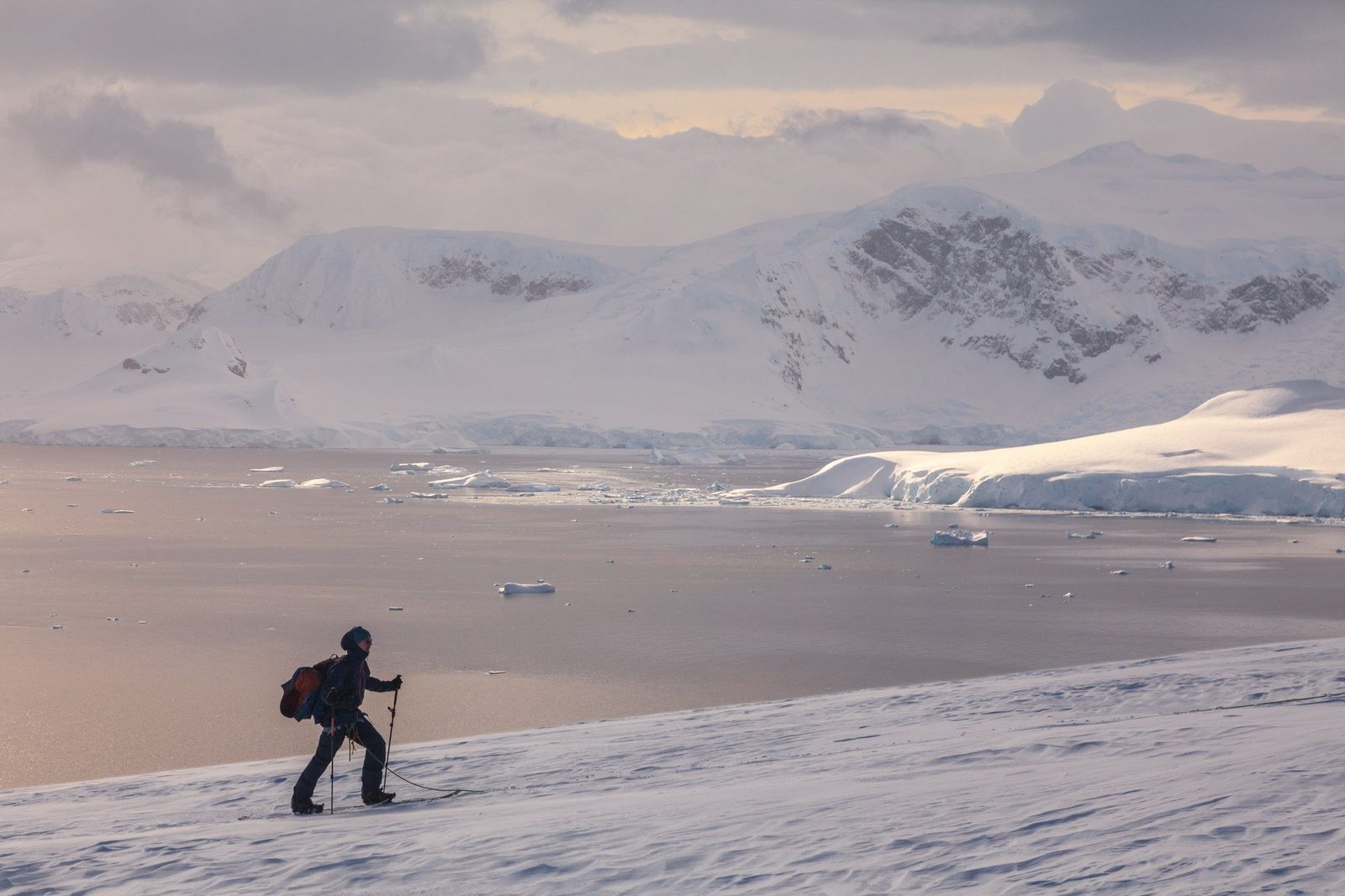
That means you can ski a red run anywhere in the resort and a black without thinking about it, and then keep your form when the surface turns to soft powder, spring corn, wind-affected crust or the flat grey light of a whiteout. Deep snow rewards a different technique — you sit back a touch, you keep the skis working together, you read the fall line and pick a clean path through it. You won't need to be elegant. You'll need to be in control, run after run, when your legs are tired and the snow isn't perfect.
If that describes you, most of the catalogue is open. If a black run in poor visibility still frightens you, tell me — we'll get you there first, and that's a good use of a season.
Legs and lungs: what ski touring asks of you
Ski touring adds a second demand on top of the skiing, and it's the one people underestimate. You climb what you ski. Skins under the skis, a steady rhythm, kick turns to zig-zag up the steep bits — and a pack on your back the whole time.
A touring day is measured in metres of vertical climbed, and 800 to 1,200 of them is a normal morning before you've earned a single descent. It isn't a sprint. The pace is deliberately slow, aerobic, conversational — go slow to go fast, as the old line has it — but you hold it for three or four hours. If you run, cycle, hike with a loaded pack or spend real time in the hills, you already have the engine. If your fitness lives entirely on lift-served pistes, that's the gap to close before you come, and the good news is that it closes fast with a few honest months of work.
The reward is the part nobody sells you on the brochure: a summit you reached under your own steam, and a descent down a face where yours is the only track.
Iceland: it's the descent that counts
Heli-assisted ski touring changes the sum in your favour. One drop puts you high on a summit in the morning — then it's skins, and your own two legs, for the rest of the day.
On the Troll Peninsula in north Iceland, that means big open faces and couloirs falling from ridgeline toward the ocean, descents that can approach 1,400 metres of vertical, and spring snow softening in the long northern light. The lift you save at the start is real. What it doesn't do is make the terrain any gentler — the descents are sustained, the snow changes as the day warms, and you're skiing committing lines a long way from a road. The touring and the freeride skiing are the norm here; the helicopter is simply the key that unlocks the first summit. So the question isn't "can I handle a helicopter" — it's "can I ski a long, serious descent in variable snow, several days running". If the answer is yes, Iceland is one of the finest weeks I know.
The sea, on top of it all
A ski-and-sail trip stacks one more layer on the skiing: you live aboard. The mountains rise straight out of the fjord, a small boat drops you at the foot of the climb, you skin to a summit and ski back down to the water — then you're back on deck for the crossing to the next one.
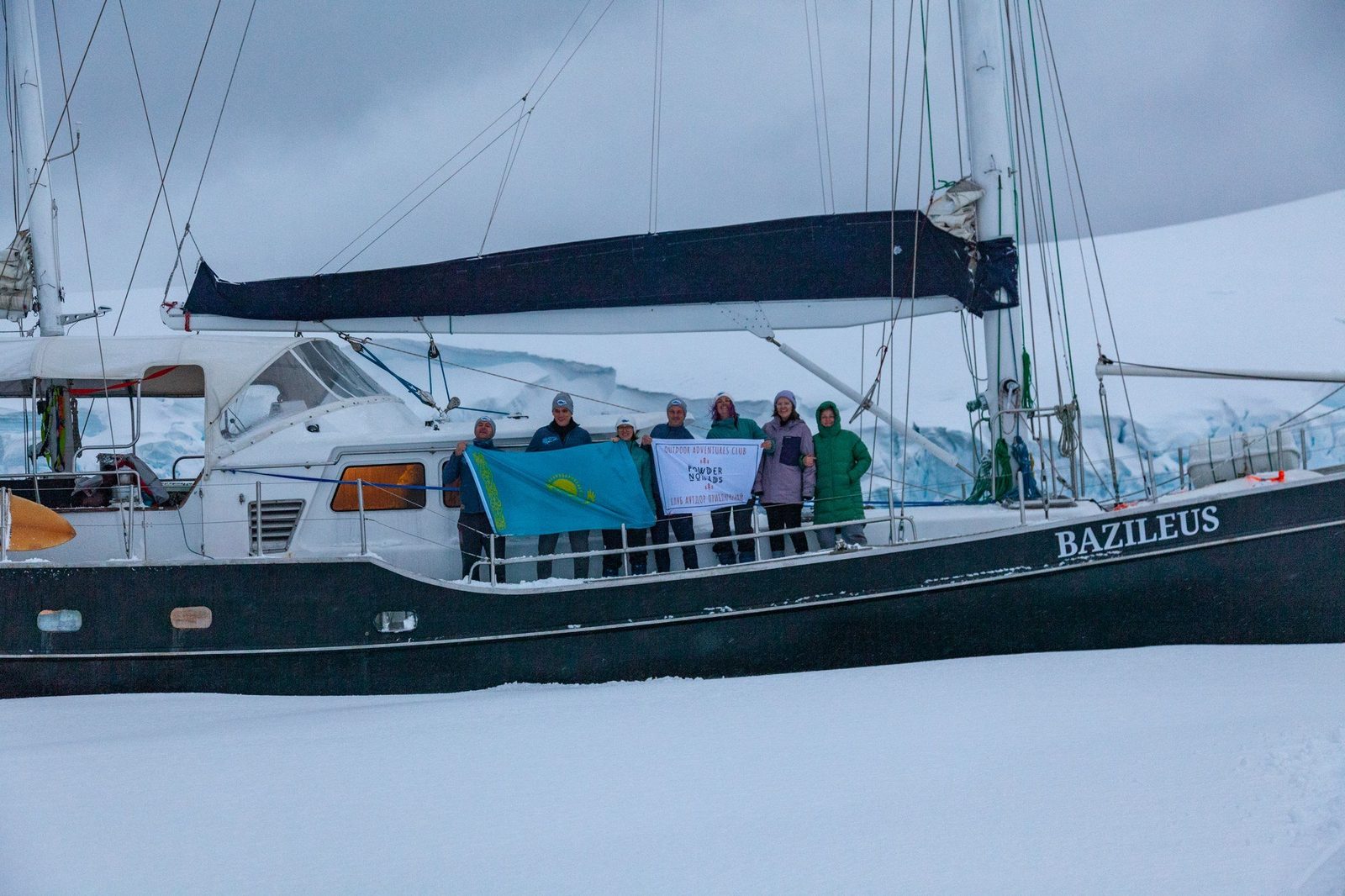
What that asks of you sits outside your skiing. A stomach that copes with a swell, or the sense to take something for it before it copes with you. The willingness to carry your own kit up a companionway and haul it in and out of a tender in cold water. A degree of self-reliance aboard a small vessel, where everyone lends a hand and there's no room service. None of it is hard if you know it's coming — but a berth on a boat is no place to discover you're miserable at sea. Tell me honestly, and we'll know whether the water is for you.
You get fitter before you go
Nobody arrives at the level they want by accident. The people who ski well on day six are, almost without exception, the ones who trained for it — and the training is not complicated.
Build endurance first: three or four sessions a week where you hold a steady effort for forty-five minutes or more — running, cycling, uphill walking with a pack, whatever you'll actually do. Add leg strength — squats, lunges, step-ups, the unglamorous work that lets your quads keep firing on the tenth descent. And put in the off-piste mileage you can, in your home resort, in every snow you can find, because nothing replaces time on skis in real conditions. Give it a couple of months and you'll feel the difference on the hill from the first climb. Turn up undertrained and the mountain will tell you by lunchtime on day two.
What if I've overestimated myself?
It happens, and it isn't a disaster — it's information, and the whole system is built to catch it. You'll be looked after by a mountain professional — a qualified off-piste ski instructor or an IFMGA/UIAGM mountain guide, depending on the terrain — and part of their job on day one is to read the group honestly and set the day to it. Not the day on paper. The day the snow and your legs will actually allow.
Turning back is part of the craft, not a failure of it. Some mornings the snowpack doesn't hold and we don't go — we read the avalanche bulletin, we look at the slope, and we make the smart call. An itinerary is always indicative: snow and weather depending. If a line is beyond you on the day, we ski a better one for you, and you finish the week having skied well within yourself rather than badly at your limit. That's not us being cautious for the brochure. It's how you come home.
Level by trip, at a glance
A quick read, honestly graded. Match yourself to the line, then talk to us.
Alpine off-piste & freeride (Val-d'Isère, the Alps) · a confident off-piste skier, at ease on black runs and in most snow — the most accessible way in.
Ski touring & freeride touring (Lofoten, Lyngen) · a solid off-piste skier with real stamina, happy to climb 800–1,200 m before the descent.
Heli-assisted ski touring (Iceland, Troll Peninsula) · a strong off-piste skier who can hold form on long, sustained descents in changeable snow, day after day.
Ski & sail (Lyngen and the far north) · touring fitness, plus sea legs and a bit of self-reliance aboard a small ship.
Japan powder (Hokkaido) · a comfortable off-piste skier with a taste for deep, light snow and tree skiing — technically forgiving, gloriously deep.
Expeditions (Svalbard, Greenland, Antarctica) · the most demanding of all: a strong off-piste skier, seriously fit, genuinely self-reliant and committed.
Straight answers to the questions we get most
Do I need to be able to ski off-piste?
Yes — that's the one non-negotiable. You should be a comfortable off-piste skier who can link controlled turns down a sustained slope in varied snow. You don't have to be an expert, and you certainly don't have to ski steep couloirs. But if you've only ever skied groomed pistes, a season of off-piste mileage first is the honest advice — and it's advice we'll give you gladly.
How fit do I need to be for a ski touring trip?
Fit enough to climb 800 to 1,200 metres of vertical at a steady pace, then ski down well, several days in a row. You needn't be an athlete. If you run, cycle or hike with a loaded pack through the year, you're most of the way there — and a couple of focused months beforehand closes the rest of the gap comfortably.
Is heli-assisted skiing in Iceland harder than ski touring?
Not harder — different in shape. The helicopter saves you the first climb, but the descents off the Troll Peninsula are long, sustained and skied in changing snow, so the demand is on your downhill skiing and your endurance across the week. Strong off-piste skiing matters more here than raw uphill fitness.
What happens if the level turns out to be too much for me?
We adapt the day to you — that's what the mountain professional with you is for. The itinerary is always indicative, snow and weather depending, and we'd far rather ski a line well within your range than push you onto one that isn't. Turning back, or choosing an easier objective, is a normal part of a well-run week.
A word from the founder I've spent more than twenty years reading levels on the first morning, and I've learned to say the true thing rather than the flattering one. If a trip isn't right for you yet, I'll tell you — and I'll tell you exactly what to work on so it will be. That honesty is the whole point of doing this properly. If you're not sure where you sit, that's the best possible reason to get in touch. Tell me how you ski and where you've skied, and I'll point you to the right trip — or the right season of preparation first. — Boris Malesset, founder of PowderWeGo, an off-piste ski professional since 2001
Ready to find the trip that fits your level? See all our adventure ski trips, or tell us how you ski and we'll match you.
For a country-by-country picture of where a given level takes you, read our heli-assisted ski touring in Iceland and our powder ski trip in Hokkaido, Japan. You can also work through the detailed off-piste level guide on our Val-d'Isère site before you decide.


Comments