
What a Ski Adventure Costs — the bill, line by line

A figure lands in your inbox for a week of ski touring somewhere remote, and it looks like a lot. Sometimes it is. The honest question isn't whether the number is big — it's what the money actually pays for, and where a cheaper quote has quietly removed something you'd have wanted on the day it mattered. That's the part nobody breaks down. So here is what a backcountry ski trip really costs, taken apart line by line, with no invented figures and nothing dressed up.
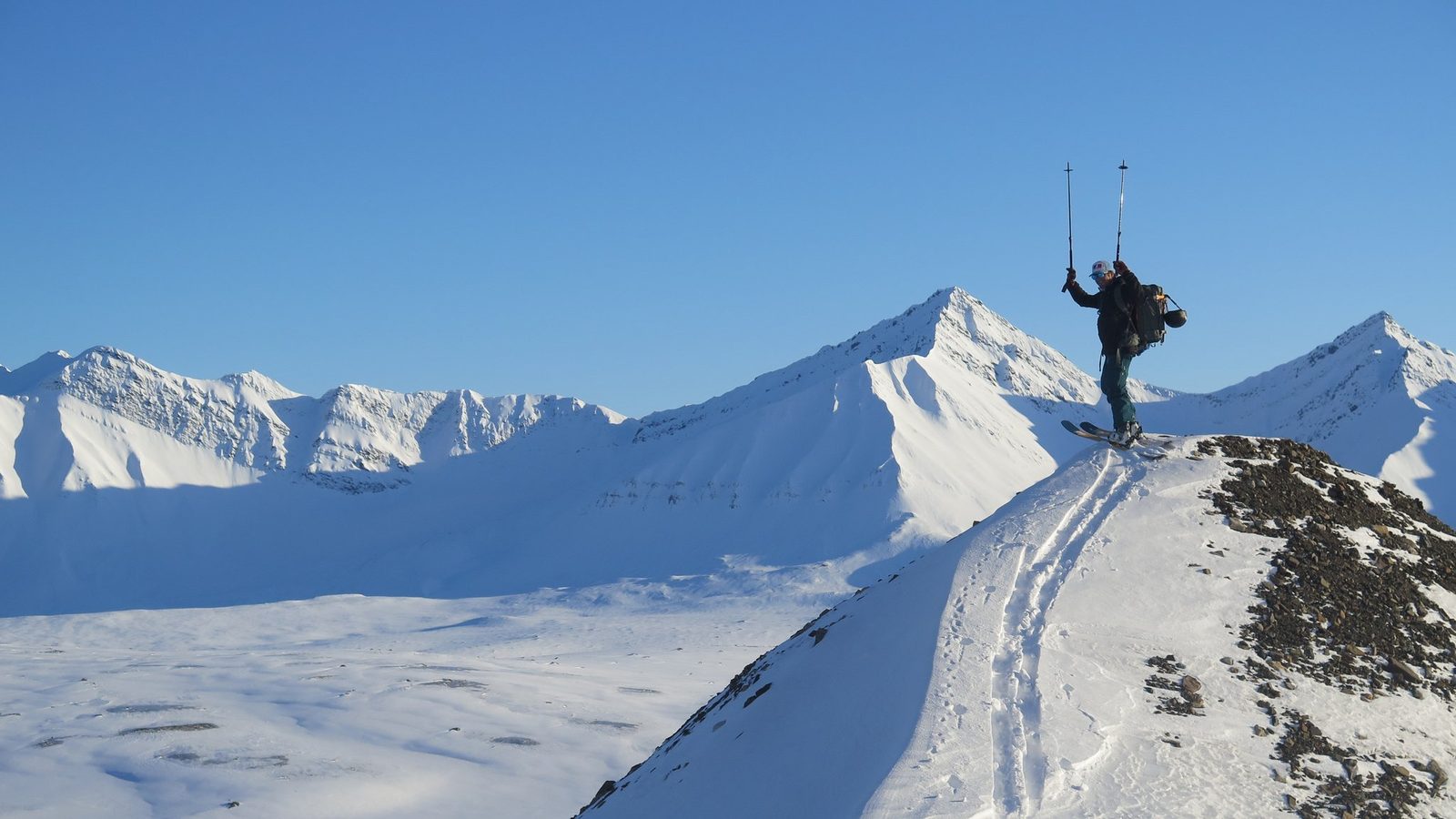
One thing to settle before the numbers, because the whole industry blurs it. An expedition is not a marketing word. In our book it means polar-grade commitment and isolation — hauling everything you need to remote ground with no road out, the sort of thing Svalbard, Greenland and Antarctica ask of you. A week of ski touring in the Lofoten, freeriding in Japan or heli-assisted touring in Iceland is a trip — a serious one, but a trip. We keep the word "expedition" for the handful of places that earn it, and you'll see why that distinction changes the bill.
We quote our own trips bespoke, for small privatised groups, so this isn't a price list. It's the anatomy of a price — the thing you should read before you set two quotes side by side and decide one is simply the better deal.
In brief There's a trip at every price · from a touring week in the Lofoten to a polar expedition — the range is wide and honest Biggest line item, usually · the guiding — ratio and qualification, indexed to the terrain The real variable · how many days actually get skied, not how many are printed Where cheap hides · thinner ratio, longer transfers, softer safety margin, less flexibility Why an expedition costs most · Svalbard, Greenland and Antarctica carry logistics a lift-served week never sees What you're buying, in one line · the margin to turn back without it costing you the trip How we price · small privatised groups, quoted to the plan, not sold off a shelf
Start with the thing that keeps you alive
The first line on an honest bill is the guiding, and it is usually the largest. Not accommodation, not flights — the person reading the avalanche bulletin each morning and deciding whether the slope you've come 3,000 kilometres for is one you'll actually ski.
There's a specific, verifiable qualification behind that. In avalanche terrain, the authority is a mountain professional — a qualified off-piste ski instructor or an IFMGA/UIAGM mountain guide, depending on the terrain, with the international carnet the benchmark once the ground turns glaciated or genuinely alpine. Not a chaperone, not a random instructor out of their depth. When you read a quote, the qualification of the person in front is a hard cost, and it's the one most easily shaved to make a number look friendlier. You can check what the international carnet actually means — it's a useful yardstick when a brochure says "guide" without saying which kind.
Then there's the ratio: how many skiers to one guide. On rolling, well-known terrain, a guide can safely look after more people. On a committing spring face in the Arctic, with a wind slab on a north aspect and a poor run-out below, that number comes down — sometimes sharply. A tight ratio costs more per head because the guide's day is split between fewer of you. It also means that when the light goes flat and a decision has to be made in the next two minutes, someone is actually watching you and not seven other people.
Safety isn't a feature you add on
Read a cheap quote closely and the safety line is usually where the savings hide, because it's the one a client can't easily see until the worst afternoon of the trip.
The kit is the visible part: transceiver, shovel and probe as standard, airbag packs, a group medical kit, and on remote ground, a communications plan and an evacuation plan that were made before anyone clicked their bindings in. None of that is expensive on its own. What's expensive is the judgement it sits inside — the guide who does a snow pit when the forecast says one thing and the slope says another, and the operation that has built in enough slack to let that guide turn the group around without blowing up the whole week.
That last point is the one worth paying for. A trip priced to the bone has no room to lose a day. So the pressure, quietly, is always to go — and going when you shouldn't is precisely how people get hurt. A properly costed trip carries the margin to turn back. You are, in a real sense, paying for the days you don't ski.
If you want to understand what the guide is actually weighing each morning, national avalanche services publish their own forecasts and teaching — avalanche.org gathers the North American forecast centres and the basics, and the discipline reads the same everywhere. It's the clearest window into the work the top line of your bill is really paying for.
Small group, whole mountain
The next line is exclusivity, and it's easy to misread as a luxury flourish when it's mostly a safety-and-access decision.
A privatised small group costs more per person for arithmetic reasons: the guide, the vehicle, the boat, the lodge nights all get divided across fewer people. But the small number isn't there to feel exclusive. It's there because six skiers can move through avalanche terrain in a way that eighteen cannot — one at a time across an exposed slope, regrouped at islands of safety, off the hill before the snow warms and the danger climbs. It's also what lets the plan bend to you: your level, your appetite, the weather that morning.
This is the honest core of the whole trip, and it's where our own runs sit — small privatised groups, the itinerary built around the party rather than a fixed departure sold to strangers. When you weigh two quotes, the group size tells you more about both the price and the day than almost any other line. If our terrain and the way we run it is the sort of thing you're weighing, the full range lives on our trips and expeditions.
The helicopter question — and the one fair comparison
Here's where cost comparisons usually go wrong, so let's be precise about the one that's legitimate.
The norm — for us and for most serious backcountry weeks — is ski touring: you earn the descent on skins, up the skin track, under your own steam. Heli-assisted ski touring takes one drop to reach terrain your legs couldn't in a day, then you skin from there. Full heliskiing, where the machine laps you all day, and cat-skiing, where a snowcat does the same job on a budget, are the exceptions, not the baseline. Comparing a touring week to heliskiing as if heliskiing were the natural yardstick just muddies the water.
The one comparison that genuinely explains a number is cat-skiing against heliskiing. Both hand you the descent without the climb; the helicopter simply costs far more to run — fuel, pilot, machine, weather days on the ground — which is why a heli day sits well above a cat day for the same vertical. That's the surcharge, laid bare. Everywhere else, don't ask "touring or heli" — ask what each line on the sheet buys.
Getting there is a line item, not a footnote
The further the terrain sits from a road, the more of your bill is simply logistics — and it's real work, not padding.
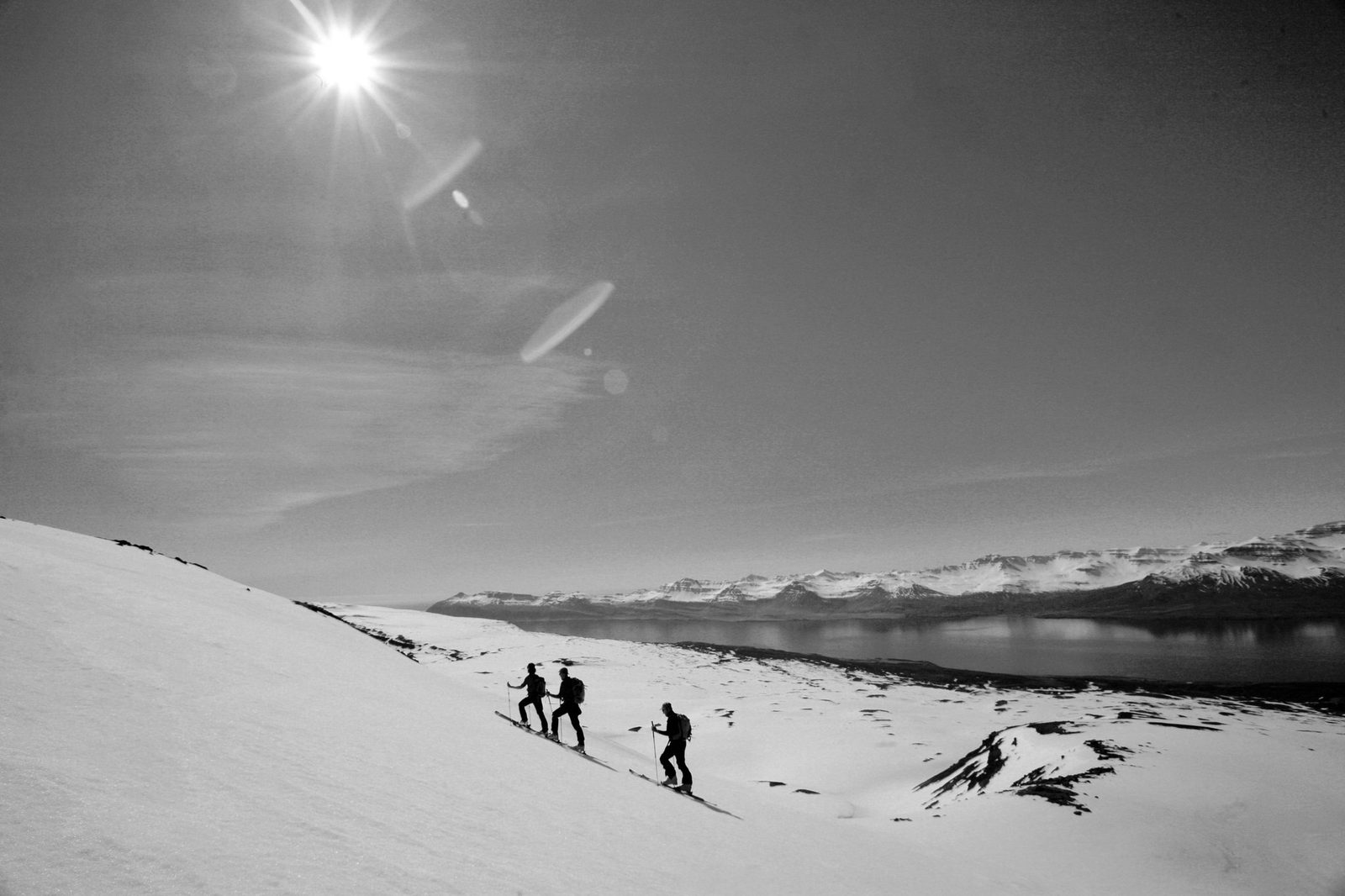
An island touring trip carries costs a piste holiday never sees: charter transfers, a lodge near the trailhead, a weather window that might swallow a day of positioning. Push out to genuine expedition ground and the logistics change in kind, not just degree. A polar expedition means a boat as a moving base camp, fuel hauled a long way, days when the plan is simply to wait for the ice, the light or the wind. Our Svalbard week runs off a vessel precisely because the good ground has no road to it — the boat is the access and the lodging in one, and you can see how that shapes a true expedition on the Svalbard ski-and-sail expedition. The Iceland trips, by contrast, reach the fjords of a northern peninsula by road and by a single helicopter drop where a punishing drive and a long skin would otherwise stand in the way; the write-up on heli-assisted ski touring on the Troll Peninsula walks through what that access actually involves, summit to ocean.
Cheaper here often means further from the snow: an airport transfer that eats a morning, a lodge an hour's drive from the trailhead, a base that adds an hour of skinning to every single day. It rarely shows up as a line called "compromise". It shows up as less skiing.
There's a trip at every price — and an expedition at the top
Ask what a week costs and the honest answer is a range, not a number. At the accessible end, a small-group ski touring week in the Lofoten runs at 3,500 € per person, flights excluded — a proper week on skins in the Arctic, near the fjords, without the polar overheads. Iceland, with its helicopter drop into the fjords, sits higher, at 7,500 €. And at the top, where the word finally earns its keep, a genuine expedition: Greenland at 8,500 €, the Svalbard ski-and-sail at 9,500 € — a boat, a captain, days held for weather, a horizon with nothing on it. The number climbs because the commitment does.
Here's where I'll be blunt, because it's the part operators tend to mumble. On the polar expeditions we can run at twice or three times the figure a low-cost operator will quote for what looks, on paper, like the same trip. We're not embarrassed by that — it's the point. The gap buys the months of preparation before you fly, the pre-trip service that gets your kit and your fitness right, the safety margin that lets a guide wait out a bad day rather than push into it, and the comfort that lets you sleep and recover so you're fit for the next one. On expedition ground, at latitudes with no easy way out, those are not extras. They are the difference between an expedition that goes well and one that becomes a story you'd rather not tell.
Where you sleep, and why it moves the price
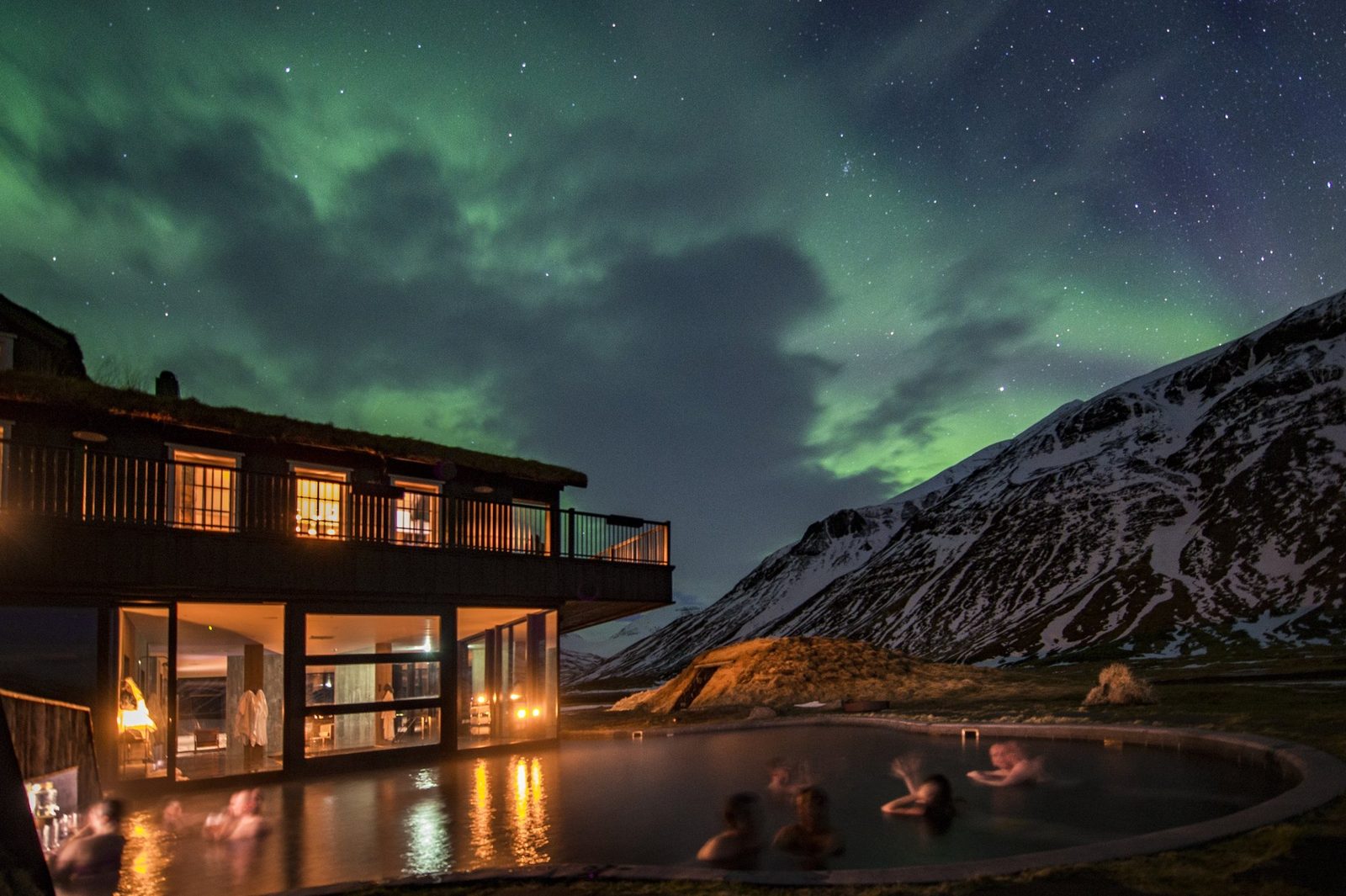
Lodging is the most visible line and the one people over-weight. A comfortable lodge with proper food and a drying room matters after a long day on skins — you recover, you sleep, you're fit for the morning. But accommodation is rarely where a serious trip's cost is won or lost. A grand room with a thin ratio and a two-hour transfer is the worse deal, every time. Judge the bed, then look past it to the three lines above.
What a low price is telling you
Add it up and the pattern is plain. A quote that undercuts the rest has, almost always, taken something out — and it's rarely the thing you'd have chosen to lose.
Cheaper on guiding · a looser ratio, or a qualification that isn't the international carnet Cheaper on safety · the same kit, less slack to turn back — so the pressure is always to go Cheaper on access · longer transfers, a base further from the snow, fewer hours skiing Cheaper on the group · more skiers per guide, a slower, more exposed day on the hill Cheaper on flexibility · a fixed programme that can't bend to the weather or to you
None of this makes an expensive quote automatically right. Plenty of premium prices are just margin. The test is whether the number is attached to real, nameable lines — a stated ratio, a named qualification, honest logistics, room in the plan for a bad-weather day. Honesty on the bill is the same instinct as honesty on the hill: it's what you want from the person you're trusting with the decision to ski or turn back.
A last word from the founder
I've been working off-piste since 2001, and the conversation I trust most is the one where a client asks what the price is made of — because it means they're weighing the right things. We build each trip for a small privatised group and quote it to the plan, not off a shelf. There's a trip at every price on our books, from a touring week in the Lofoten to a polar expedition, and I'll always tell you which one your budget and your legs are ready for. If a number looks low, I'd rather tell you which line went missing than win the booking and lose the week. When you're ready to see the terrain and how we run it, the full range is here — dates and shape we work out together. — Boris Malesset, founder of PowderWeGo, off-piste ski professional since 2001
Questions people ask about the cost
What's the difference between a ski trip and a ski expedition?
Mostly commitment and isolation. A ski trip is a serious week on skins with a lodge, road access and a way out — the Lofoten, Japan, Iceland. An expedition means polar-grade ground with no road, a boat or a camp as your only base, and days held for weather; in our book that's Svalbard, Greenland and Antarctica. The word is overused in the industry, so we keep it for the places that earn it — and those carry logistics the others never do.
How much does a guided ski touring week cost?
There's a trip at every price. At the accessible end a small-group touring week in the Lofoten runs at 3,500 € per person, flights excluded; Iceland with its helicopter drop sits at 7,500 €. A genuine polar expedition costs more — Greenland at 8,500 €, the Svalbard ski-and-sail at 9,500 € — because a boat, a captain and weather days are built into the price. These are our verified live figures, not estimates.
Why does a polar expedition cost two or three times a low-cost quote?
Because the gap is the preparation, the safety margin and the comfort — and on polar ground those aren't extras. We run at twice or three times some low-cost operators, and we're not embarrassed by it: it buys months of pre-trip service, a guide who can wait out a bad day rather than push into it, and rest that keeps you fit for the next one. At latitudes with no easy way out, that's the difference between an expedition that goes well and one that doesn't.
Is heliskiing worth the extra cost over ski touring?
They're different trips. Ski touring earns the descent on skins and is the norm for a backcountry week; heliskiing is the exception, and the surcharge is real because a helicopter is far dearer to run than the alternatives. The only clean cost comparison is cat-skiing against heliskiing for the same vertical — that gap is the helicopter, laid bare.
Why should I be suspicious of a cheaper quote?
Because a low price almost always hides a compromise — a looser guide-to-skier ratio, a base further from the snow, or less room in the schedule to lose a day to weather. The saving is rarely on something you'd have chosen to give up. Ask which line came down.
How does PowderWeGo price its trips?
As small privatised groups, quoted to the plan rather than sold off a fixed shelf. The itinerary is built around your party, your level and the conditions, and we'll tell you what each part of the number pays for. See the full range of trips and expeditions on our website and the shape is worked out with you.


Comments