
Heli-Assisted Ski Touring in Iceland: the Troll Peninsula, From Summit to Ocean

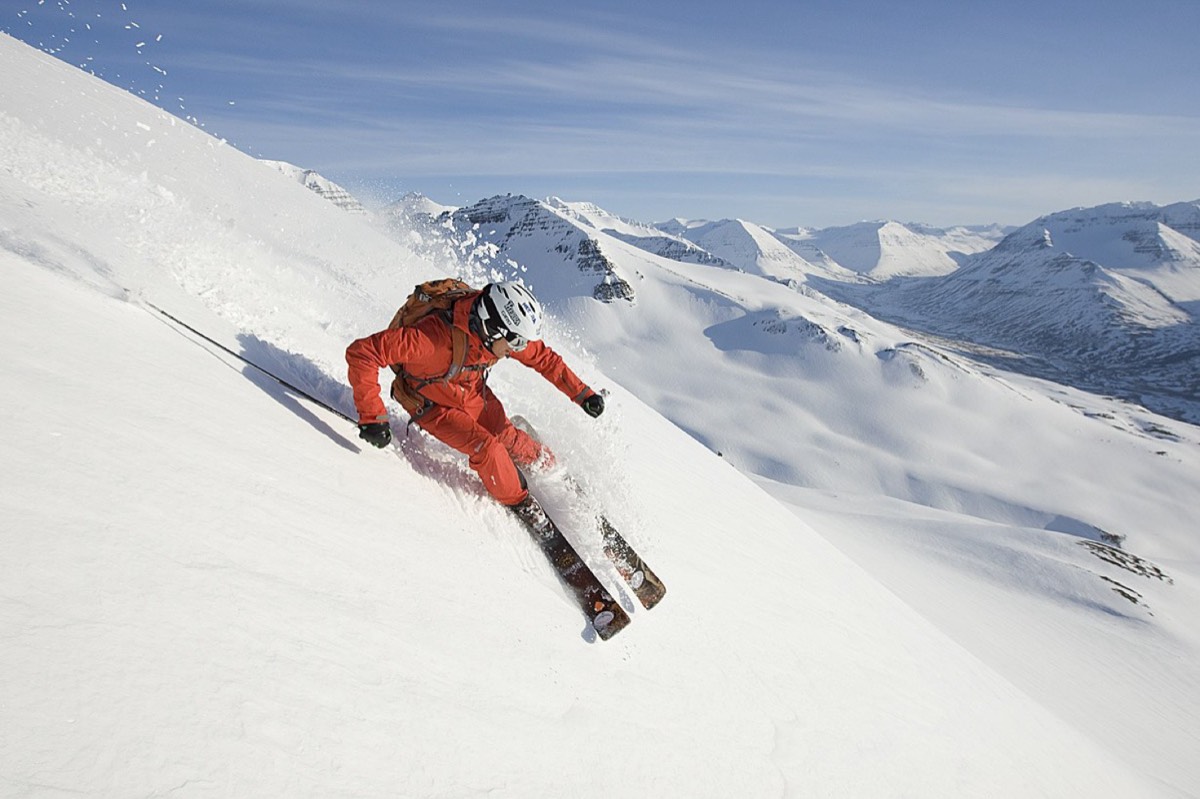
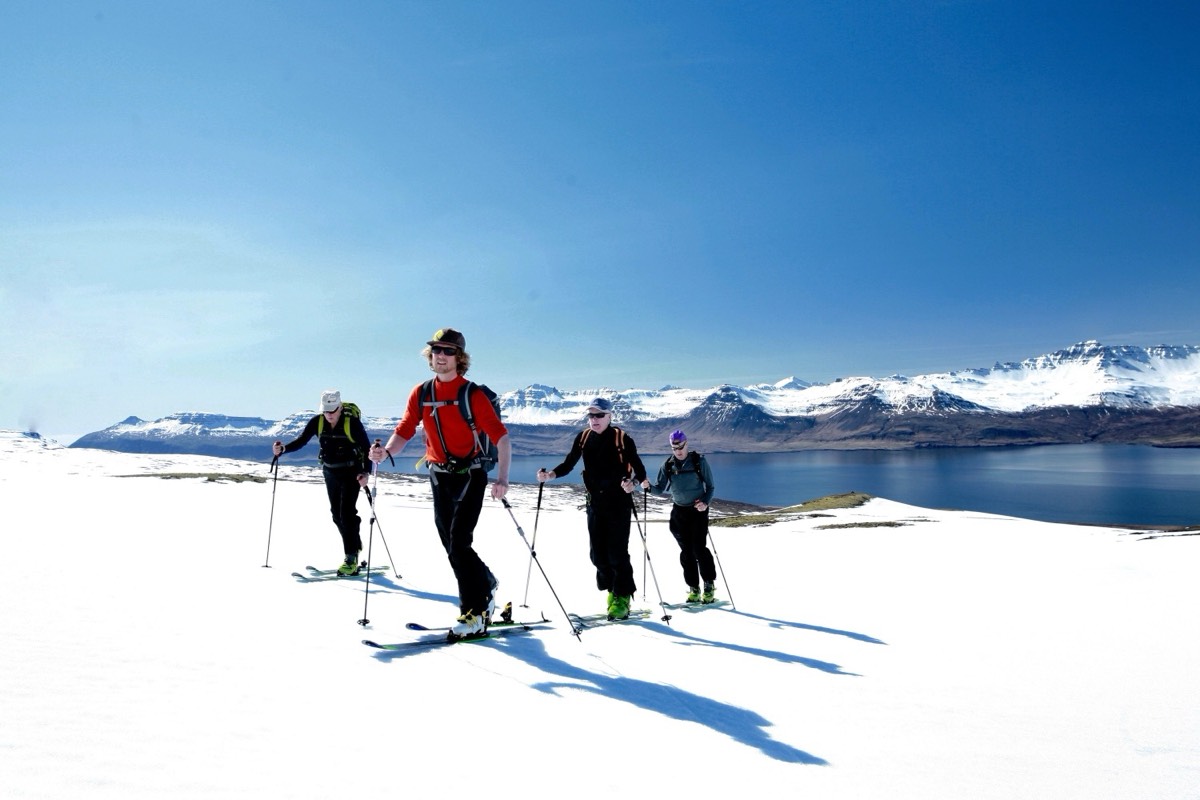
A helicopter sets you on a summit ridge in the morning, the door shuts, and the rest of the day is yours — skins on, long open faces and tight couloirs that run, often, straight down to the water. That, in plain terms, is heli-assisted ski touring on the Troll Peninsula. This is Tröllaskagi, the broad finger of mountains between two fjords in north Iceland, peaks rising sheer from the sea. No lifts, no queues, a private lodge at the edge of the water, shared by two small groups and no one else. Ski touring in a place where the snow stays good past midnight and the descent ends at the ocean.
The terrain: a peninsula that runs to the sea
One drop, then the skins go on
March, April, May: reading the season
Who it's for
The snowpack, and the good sense to turn back
The lodge on the fjord
A week, day by day
In brief
The guide's word
FAQ
The terrain: a peninsula that runs to the sea
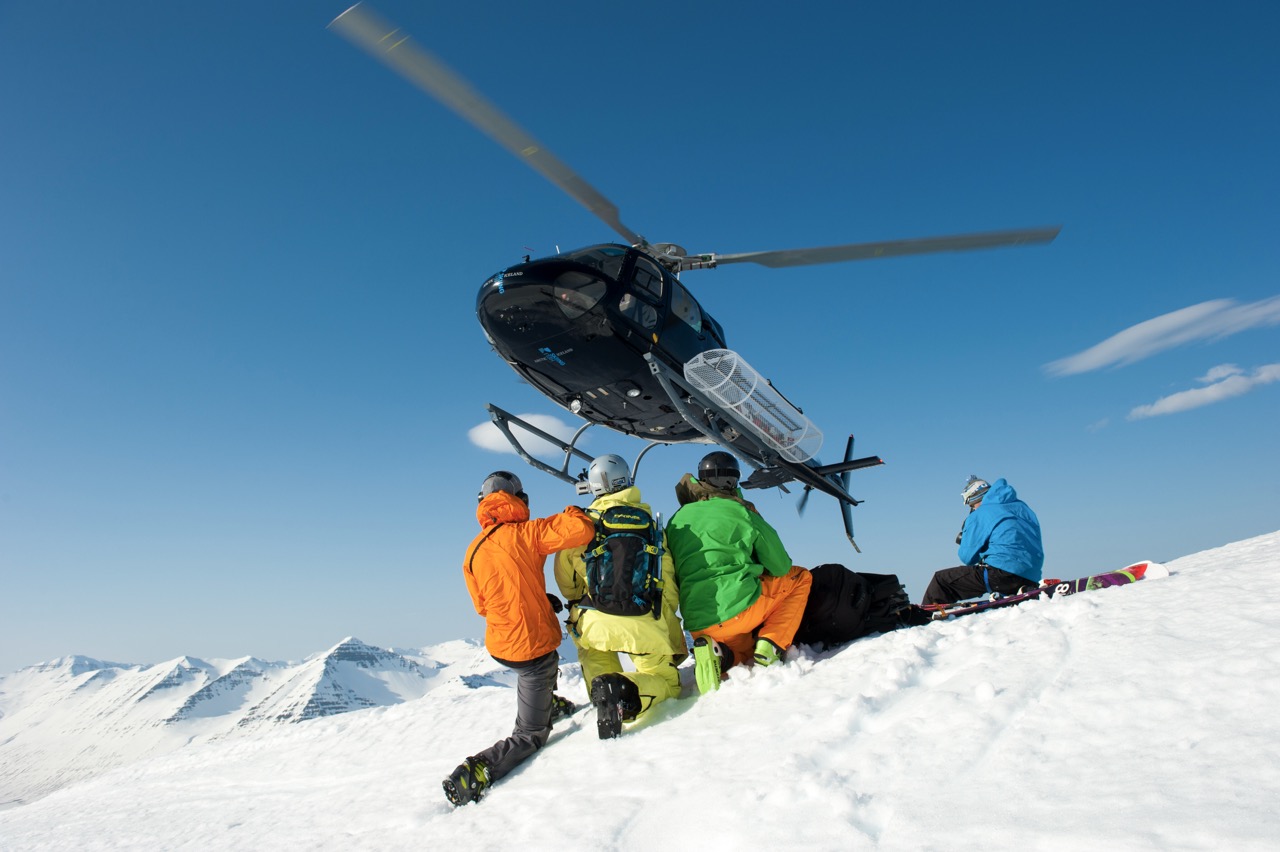
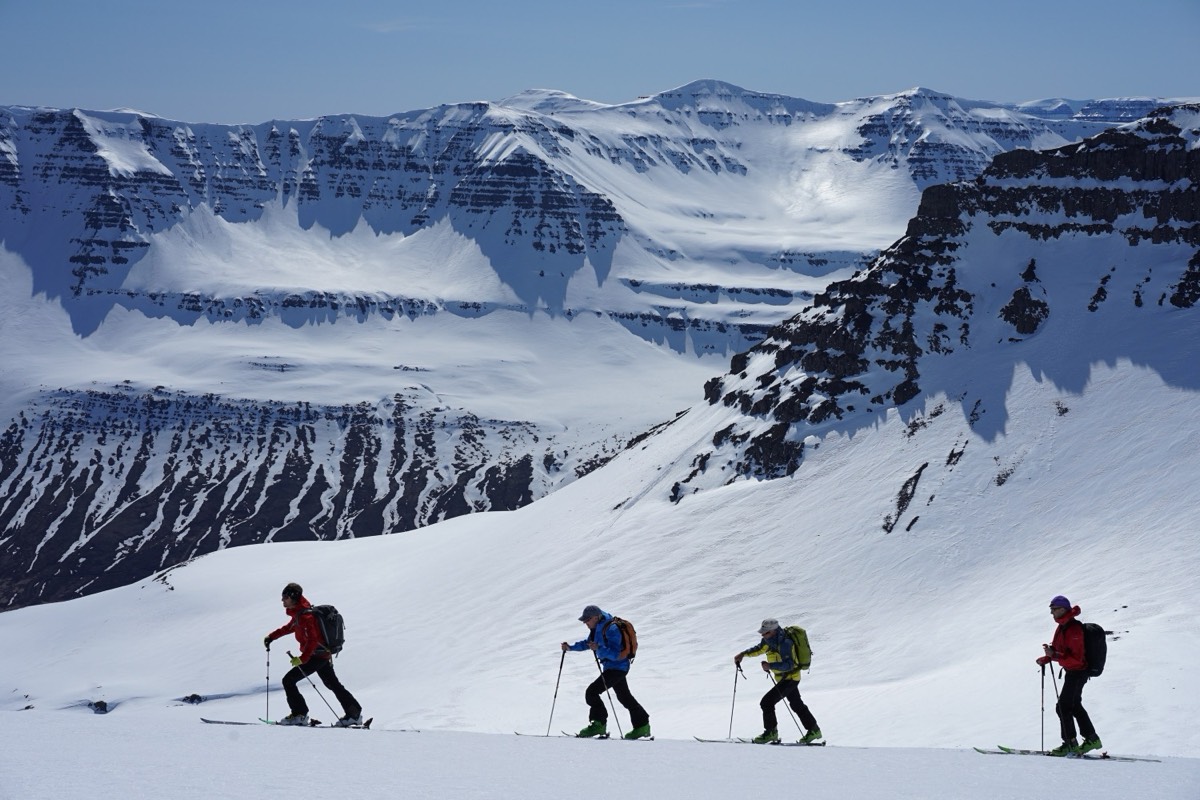
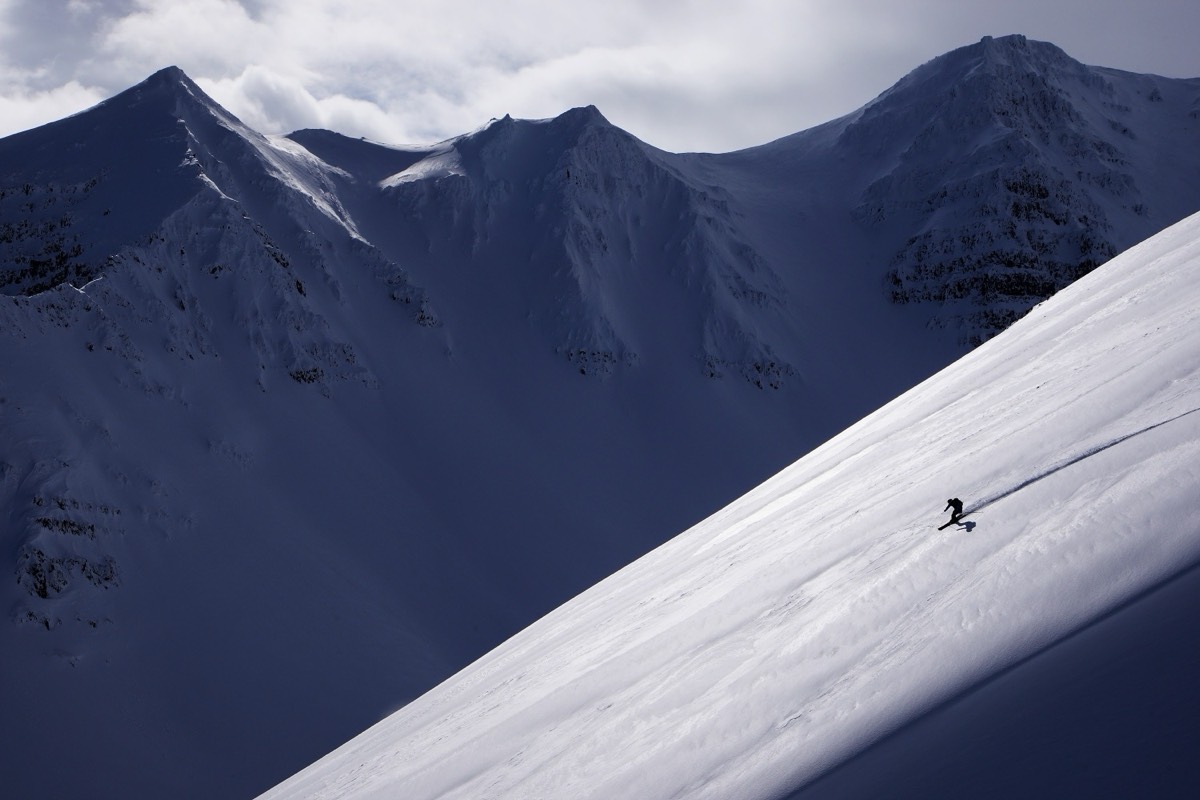
Most ranges make you choose between access and adventure. Tröllaskagi declines to. The peninsula — the highest ground in Iceland outside the central highlands — carries hundreds of summits across more than 4,000 square kilometres, and the great oddity of the place is that the mountains step straight out of the Atlantic, so a run can begin on a wind-scoured ridge and end, the same morning, with the tips a few metres above the tideline. Verticals reach close to 1,400 metres, top to sea, which is a figure most Alpine resorts can only dream of stitching together across a whole day.
What that buys you is variety inside a single descent. Wide spring snowfields up high, a couloir to pick your way down through the middle band, then a long shoulder that opens out, rolling and unhurried, to a black-sand beach. Roughly nine peaks in ten here are skiable — few flat shoulders, few cliff bands to navigate around — so the off-piste reads cleanly and the line can be chosen to the conditions rather than around the terrain. Some days the reward is a sustained run off a steep summit headwall; other days it is open, rolling ground that lets you let the skis run. If the idea of a summit that drops straight into salt water draws you, the same Arctic geometry runs through the Lofoten Islands of northern Norway — peaks rising sheer from the sea, skinned on foot from the shore.
One drop, then the skins go on
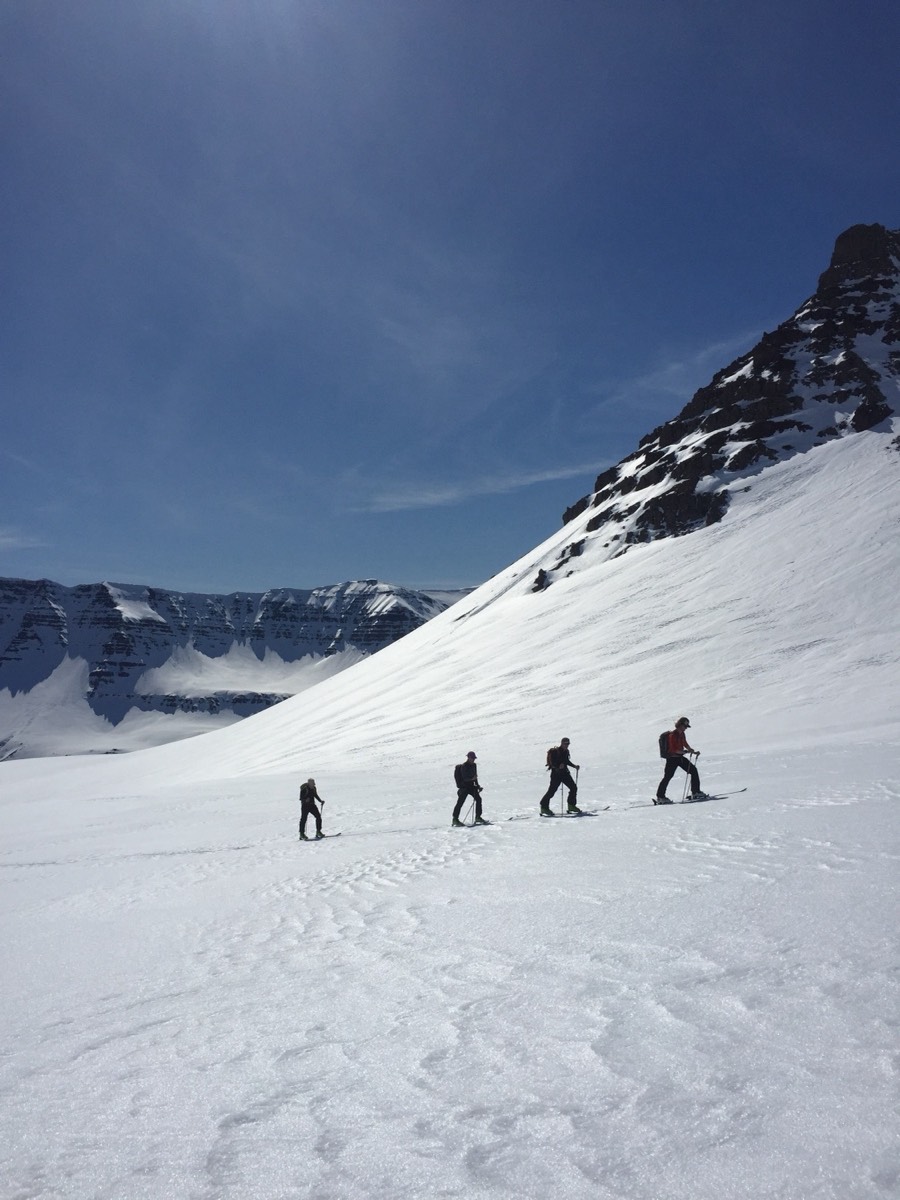
Picture the morning. A short transfer takes you from the lodge to the dropzone, twenty minutes up the valley; the helicopter sets you down on a high col, the door shuts, and within a minute the noise is gone over the ridge — and you are standing in the quiet with the whole day ahead of you. That is the shape of heli-assisted ski touring: a single strategic drop lifts you over the long valley approach and onto ground you could not reach on foot before dark, and then the machine leaves for good. The rest belongs to skins, transceiver and your own legs. You climb where the snow asks to be climbed, read the aspect, and earn the second and third descents on foot.
It is a deliberate balance. Lap-after-lap mechanised skiing surrenders the quiet; full ski touring buys the quiet and spends half the day walking in. One heli-assist drop a day keeps both — the remote start, then hours of unhurried off-piste with no machine overhead. Where a snowcat keeps grinding back up for run after run, as it does on our cat-skiing trips in the Kazakh Altai, the helicopter here makes a single appearance and then leaves the mountain to you. Two small groups — four skiers to a guide, five at the most — share the lift up; nobody is waiting on a crowd.
March, April, May: reading the season
People always ask the same first question — when is the best time to ski Iceland — and the honest answer is that it depends what you are after. The Tröllaskagi window runs from roughly March to late May, and it splits cleanly into three moods.
Mid-March to mid-April — colder, drier snow, the best odds of true pow and first tracks off the top, and the northern lights still about in the dark of evening.
Mid-April through May — peak season for many, and the sweet spot: reliable corn snow, long daylight, the occasional fresh top-up of blower up high.
Late May — the midnight sun arriving, near-windless corn that softens by mid-morning and never fully freezes, and the chance to climb at any hour you fancy.
Our trip sits in April, which threads the needle — a real chance of winter snow up high with the stability and the light of spring already arriving. The far-northern sun is low and gentle, so south-facing aspects hold their surface well into the afternoon rather than going to soup by eleven. There is no such thing as guaranteed snow this far north; there is, however, a long window and a guide who reads it daily.
Who it's for
Honestly: a comfortable, confident off-piste skier, not a racer. You should be able to ski the fall line under control on a 35-degree slope in mixed snow, link parallel turns off the groomed, and handle a black run comfortably whatever the surface. Previous ski touring is welcome but not required — if you walk, run or ride a bike to keep fit, the guide will teach you the skinning on the hill.
The fitness ask is real, though, and worth naming. Verticals approaching 1,400 metres and several hundred metres of climbing a day add up across the ski days; legs that have done a season of off-piste will thank you. We rate the trip 3 out of 5. Strong intermediates enjoy it fully; experts find plenty of steeper, more committing lines to go and look at.
The snowpack, and the good sense to turn back
The honest version first: avalanche terrain is never zero-risk, and anyone who tells you otherwise is selling something. The aim is not "safe" but acceptably safe — a line we have read, and judged. That said, the spring Tröllaskagi snowpack is famously well-behaved. The small swing between night and day temperatures builds even corn and a settled base, with little of the persistent weak layer that makes a mid-winter pack treacherous — which is precisely why guides here can ski steeper, more exposed lines than they would in a touchier season.
It is managed by routine, not luck. The avalanche and weather bulletin is read each morning, the aspect and timing chosen to the day, and everyone carries the standard kit — transceiver, shovel and probe, and an airbag pack — checked before the first climb. The line gets adjusted to what the snow is doing, and now and then the most expert call of the day is the good sense to turn back. For the official picture, the Icelandic Meteorological Office avalanche service publishes the regional bulletin in English.
The lodge on the fjord
Home for the week is a restored 1920s house on the water, at the foot of the terrain, facing the Eyjafjörður and the stretch of shore locals call the Gold Coast. Warm sitting rooms, an outdoor sauna and hot tub at the fjord's edge, a chef in residence. The lodge is a private lodge shared by just the two small groups on our week — eight skiers, ten at the very most — which is the whole point of the thing: an intimate scale, a world away from the groups of twelve that fill a classic ski-touring week.
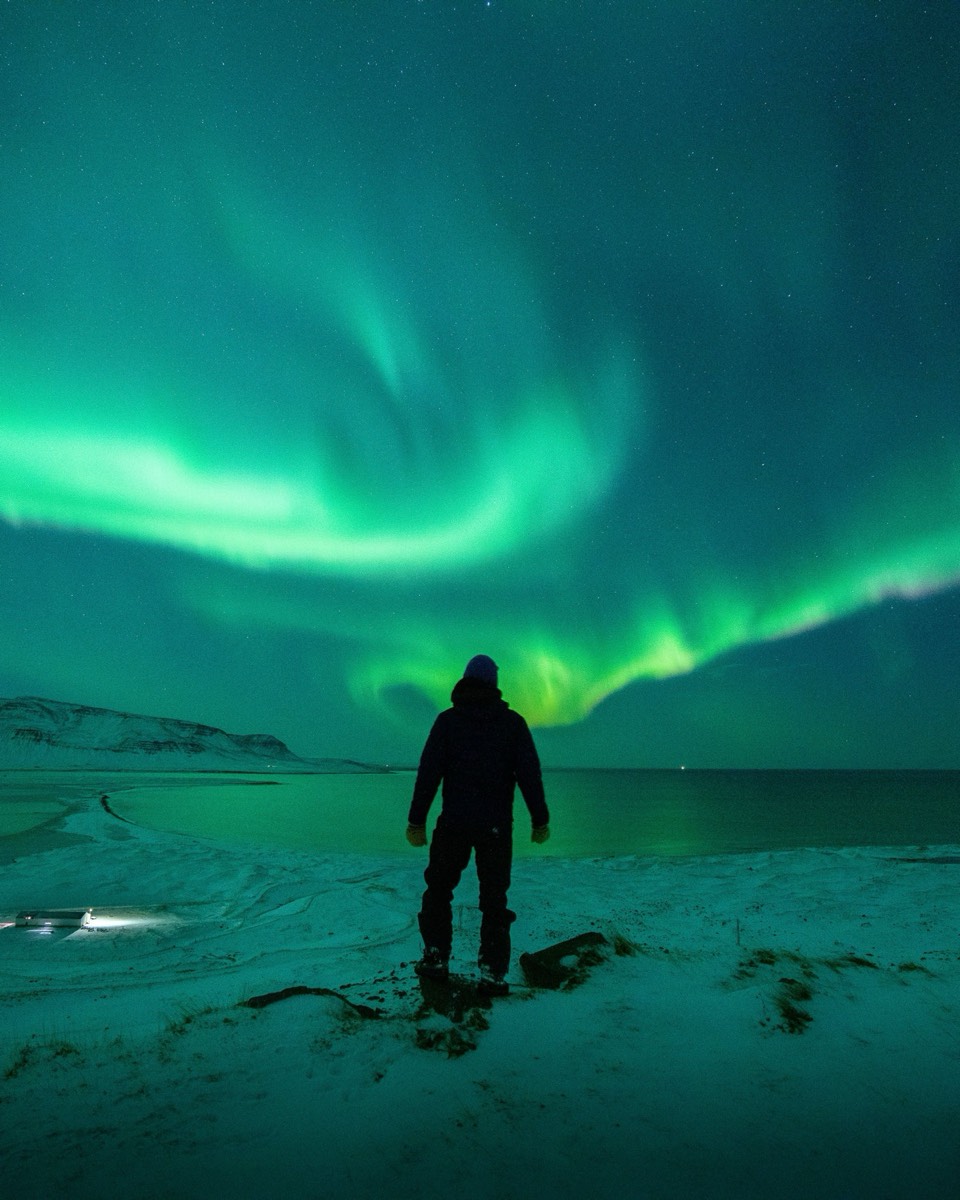
The skiing is the heart of it. But the evenings carry their own weight — the sauna looking down the fjord, the geothermal baths nearby, the chef's table and the day's runs retold over it, and, when the sky clears, the auroras over the water. There is whale-watching to be had from the nearby harbour between days, too, for those who want it.
A week, day by day
Day 1 — Arrival. Fly into Akureyri; a transfer of about 45 minutes brings you to the lodge on the fjord. Kit check, transceiver drill, dinner at the chef's table.
Days 2 to 6 — Five days on the hill. A short transfer to the dropzone, then one heli-assist drop each morning, skins to the summits and descents toward the sea — aspect and objective chosen daily to the snow. Sauna and fjord in the evenings; midnight light to linger in.
Day 7 — Departure. A last slow breakfast facing the water before the road back to Akureyri.
Indicative programme — snow, weather and group level depending. Five to six ski days; the running order is decided on the morning by the guide.
In brief
Season · March–late May · our departure in April
Duration · 7 days / 6 nights · 5–6 ski days
Vertical · up to ~1,400 m, summit to ocean
Access · one heli-assist drop a day from a dropzone 20 min from the lodge, then skins (heli-assisted ski touring)
Level · comfortable, confident off-piste skier · 3/5
Group · two small groups · 4 skiers per guide (5 max)
Lodging · private 1920s lodge on the fjord, shared by the two groups — 8 people (10 max) · sauna & hot tub at the water's edge
Getting there · fly to Akureyri · ~45-min transfer
Price · €7,500 per person
PowderWeGo trip · Heli-Assisted Ski Touring Iceland
The guide's word
In twenty-two years of guiding off-piste, I have rarely found a place that gives back so much for one decision a day. You take the drop, the helicopter goes, and then it is just skins, snow and the long northern light — and at the bottom of the run, more often than not, the sea. We keep the groups small — four to a guide, eight at the lodge — and the programme honest: indicative, and rewritten each morning to the snow. The mountain decides; we read it, and now and then we have the good sense to turn back. — Boris Malesset, founder of PowderWeGo, certified ski instructor and mountain guide, guiding off-piste since 2001
Frequently asked questions
Is heli-assisted ski touring the same as heliskiing?
No. Heliskiing laps the helicopter all day; heli-assisted ski touring uses one drop to reach a high start, then you climb on skins for the rest of the day. You get the remote access of the helicopter and the quiet of ski touring under your own steam, in one trip.
When should I come — what's the best month?
March to late May. Mid-March to mid-April for the best pow odds and northern lights; mid-April through May for reliable corn snow and long days; late May for midnight sun and the most settled spring snow. Our trip runs in April.
What level of skier do I need to be?
A comfortable, confident off-piste skier able to ski the fall line under control on 35-degree slopes in mixed snow. Previous ski touring is helpful but not essential — the guide teaches the skinning. We rate it 3/5, with steeper lines available for experts.
How dangerous are avalanches in Iceland in spring?
The spring Tröllaskagi snowpack is comparatively stable, thanks to small day-night temperature swings, even corn and little persistent weak layer. The bulletin is read every morning; everyone carries a transceiver, shovel and probe and an airbag pack; lines are chosen to the conditions. Avalanche terrain is never risk-free — the aim is to be acceptably safe, and the trip is managed accordingly.
Can you really ski down to the ocean?
Yes — that is the signature of the place. Descents of up to about 1,400 metres run from summit ridges down toward the fjords, with the final apron metres above the tideline.
How many people are on the trip?
Two small groups, four skiers to a guide and five at the most. The private lodge is shared by just those two groups — eight people on the week, ten at the very most. The small scale is the point.
How do I get to the lodge?
Fly into Akureyri in north Iceland; the transfer to our private lodge on the fjord, at the foot of the terrain, is about 45 minutes. The morning drop leaves from a dropzone twenty minutes up the valley.
This terrain is the heart of our Heli-Assisted Ski Touring Iceland trip.
One heli-assist drop a day on the Troll Peninsula, then skins to the summit and a descent to the sea — five to six ski days from a private lodge on the fjord, April, €7,500 per person. Two small groups only, eight skiers sharing the lodge; the programme is built with you, and a place is held with a simple message.
A question on level, dates or the logistics from Akureyri? → Let's plan your trip — Boris answers personally and helps you hold an option.
Worth reading next
Ski touring in the Lofoten Islands — the sister Arctic trip, summits dropping straight into the fjords.
Browse all our off-piste and ski-touring trips, or read more from the field on the Ski & Lifestyle blog.


Comments