
Winter's First Morning Belongs to Ridder

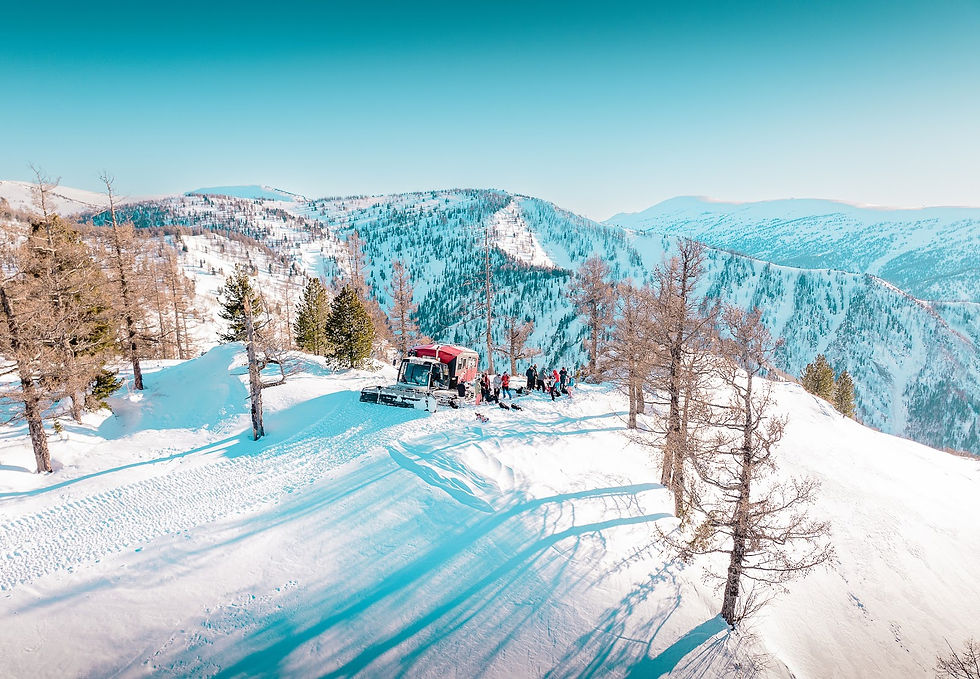
A little past seven, the air bites at the inside of your nose and the low sun slides across the taiga as though wary of waking it. The snowcat waits at the edge of the village, engine warm, a white plume rising off the bonnet. You climb into the cab, wedge your pack between your knees, and the machine noses into the birch forest. Nobody has laid a track on the face waiting for us up there this morning. Nobody this winter, in fact. It's December in the Kazakh Altai, and winter is already all the way in.

None of this is a poster promise. It's geography, and it deserves an explanation.
Snow already down, and December has barely started
The Altai rises where Kazakhstan, Russia, China and Mongolia nearly meet. You are a long way from any ocean — a very long way. The Atlantic depressions that soak Europe run out of steam well before they reach these foothills. What arrives here comes from elsewhere: the Siberian flow, dumping its dry snow onto the Kazakh slopes. Cold, powdery snow, without a gram of sea moisture in it.
The cold isn't an obstacle, it's the ingredient. December nights regularly drop below −15 °C, and that is precisely what makes the light powder that lifts off at the first turn. That same continental dryness is why the snow holds. On the north and north-east faces, the ones the low December sun never reaches, fresh snow stays intact for days after a fall. Where elsewhere the sun would crust the surface over an afternoon, here it waits, dry and cold, for someone to come and find it.
This mechanism — not a stroke of luck — is what puts Kazakhstan on the map for anyone asking themselves each year where to ski in December and actually get snow. We lay out the whole calendar of the deep cold, month by month, in our seasonal reference; here it's December we're after, and nothing else.

What changes once the skins stay in the bag
On the ground, it makes for days that are simple and easy to read. You ski two massifs sheltered from the prevailing winds, Prokhodnoy and Ivanov. The snowcat climbs, swallows its roughly +800 metres of vertical per rotation, and drops you at the top of a wide bowl or the entrance of a couloir lined with conifers. You descend, it collects you at the bottom, and off you go again. The cat isn't there to replace skinning — it's the key to terrain with no lift, no track, no timetable. If you want to understand the different ways of reaching untracked snow, from ski touring to cat-skiing, we go through them in this piece.
The real luxury here is choice. Each morning the mountain's guides call the lines in real time: what fell overnight, which way the wind blew, how the snowpack is behaving. When the ceiling drops and visibility closes in, you don't head home — you dive into the forest. Tree-skiing between birch, fir and larch gives you relief and contrast when the sky no longer will. The cat rolls when a helicopter would stay grounded: one of the snowcat's quiet advantages, and it counts early in the season.
Lunch is hot, up on the mountain. Around mid-afternoon you head back towards Ridder for the debrief, and the evening that goes with it.

Ridder, the taiga, and the road back to the dacha
The trip begins with a flight from Paris to Öskemen (the former Ust-Kamenogorsk), via Istanbul. You arrive late in the day, around five, and then two hours by minibus carry you across the snowed-in steppe and taiga to Ridder. Ridder is a village in eastern Kazakhstan, set at the foot of the Ivanov and Prokhodnoy mountains. It's from here that everything sets off each morning.
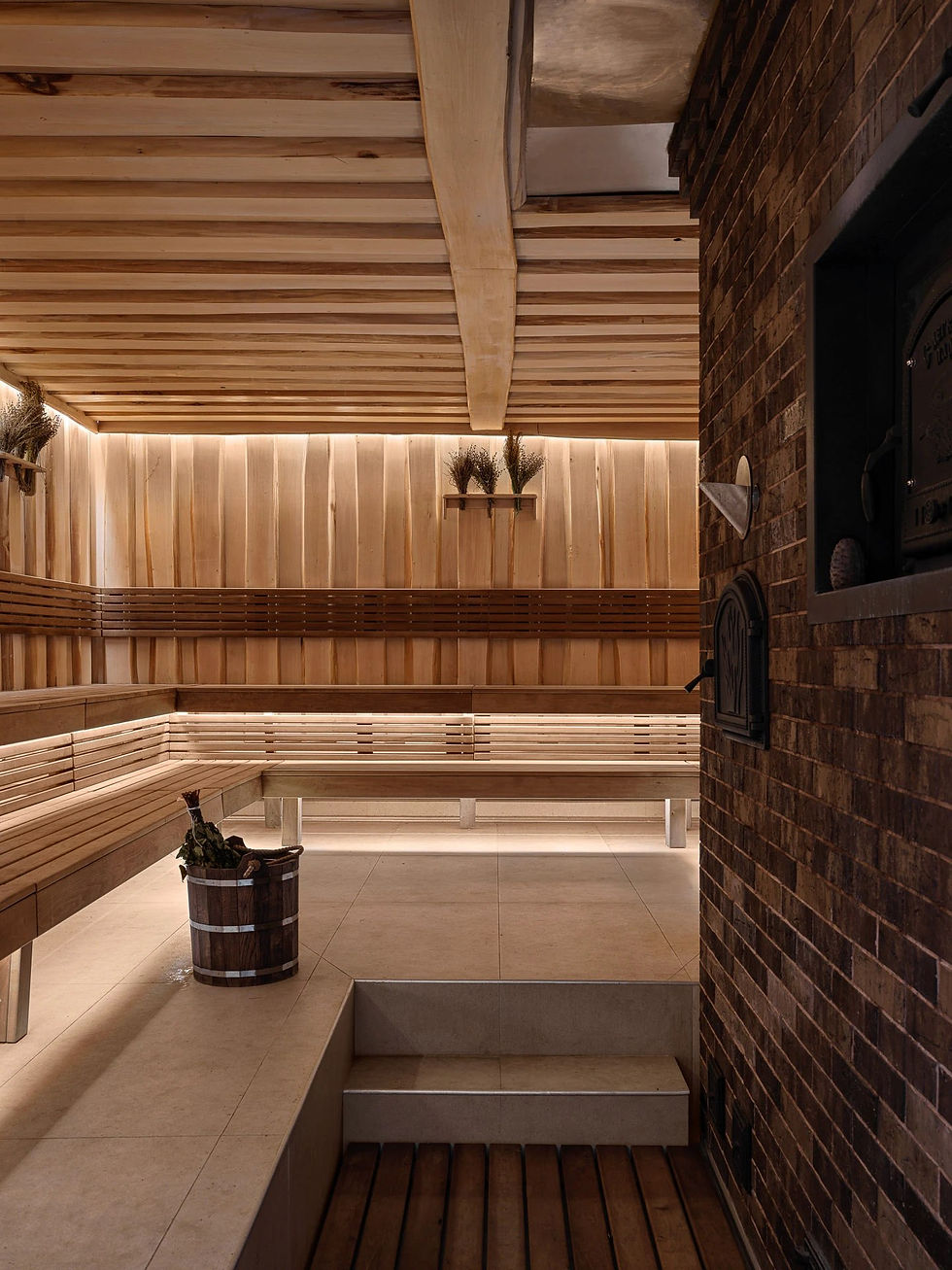
You stay in a hotel or a traditional dacha. In the evening you eat Kazakh, you drink scalding tea, and you make for the banya — the local steam bath, an end-of-day ritual that puts the legs back together. Above the ridges, an eagle holds your eye; at night, wolves keep their ground somewhere out in the taiga. You are a long way out, and that is exactly what you came for.
An early season, handled honestly
December opens the winter — and a winter that has just begun is read, not guessed. The snowpack is still building, and there is no public avalanche bulletin for this massif the way there is in the Alps. In the Kazakh Altai, nobody is going to hand you a morning risk map. What stands in for that bulletin is the daily assessment of the snowpack, done on site, and our guides' judgement of what the terrain will and won't take that day. The guides' role here isn't decorative: it's the backbone of safety.
The reference for danger remains the five-level scale defined by the European Avalanche Warning Services — the common language, even where no national service publishes a bulletin. Safety kit is provided, in the order that matters: airbag pack, transceiver, shovel, probe. Knowing when to turn back is part of the trade too, and we talk about it plainly in this piece on reading the risk.
On the level: the snowcat does the climbing, so the physical demand stays moderate (2 out of 5). But deep powder and technical couloirs call for a confident skier — reckon on 3 out of 5 on skiing ability. If you want to place yourself precisely, this guide to levels will give you a clear answer.
What the trip includes
The trip runs in December, over 8 days / 7 nights, with 6 days of skiing, from €5,950. The group is capped at 12 people to 2 guides, so six skiers maximum per guide — enough to pick fine lines without ever queuing at the top of a slope. A day of heliskiing can be arranged as an option, subject to aircraft availability.
Behind all of it are our 22 years on the ground in off-piste skiing, cat-skiing and backcountry — that's what lets us go and lay the season's first tracks where nobody else goes.
In brief
Season · December, when continental winter is already fully in place across the Kazakh Altai.
Snow · Siberian flow, cold and dry; nights regularly below −15 °C; north and north-east faces that hold the fresh stuff for days.
Getting to the terrain · the snowcat, roughly 800 metres of vertical per rotation, on the Prokhodnoy and Ivanov massifs.
Level · skiing 3/5, fitness 2/5 — the machine does the climbing, but deep powder and tight couloirs ask for a confident off-piste skier.
Safety · kit provided, in the order that counts: airbag pack, transceiver, shovel, probe. No public avalanche bulletin covers this range: the assessment is made on the ground, every day.
Format · 8 days / 7 nights with 6 days of skiing, 12 skiers to 2 guides, from €5,950. Flight to Öskemen via Istanbul, then two hours by road to Ridder.
Questions we get asked
Is there enough snow in December?
The Altai sits a long way from any ocean, and Atlantic systems run out of steam well before they get there; what reaches here comes off the Siberian flow, and it brings dry snow. The continental cold does the rest: on the faces December's low sun never touches, the fresh stuff sits untouched for days after a fall.
What level do I need?
The snowcat does the climbing for you, so the physical demand stays moderate. Deep powder and conifer-lined couloirs, though, ask for a solid off-piste standard — call it 3 out of 5.
What happens when the cloud comes down?
You drop into the forest. Tree skiing among birch, spruce and larch gives back the relief and contrast the sky has stopped providing. And the cat keeps running on days a helicopter would stay on the ground.
December in the Altai is a winter already fully in, and a mountain nobody has yet skied this season. If the idea speaks to you, have a look at the cat-skiing trip in Kazakhstan or write to us to talk it through.
--- SEO ---
Keywords served: cat skiing kazakhstan, ski kazakhstan, kazakhstan ski season, kazakhstan ski touring, kazakhstan ski trip, altai cat skiing, altai kazakhstan skiing, skiing altai mountains, where to ski in december, where to ski in december asia, skiing in december, best snow in december, best snow destinations in december, Ridder
Internal links placed:
/post/best-time-to-ski-far-north-month-by-month
/post/ways-to-reach-untracked-snow-the-backcountry-modes (access modes)
/post/reading-avalanche-risk-when-to-turn-back (safety)
/post/what-level-adventure-ski (level)
/catskiing-kazakhstan (trip page ×2, incl. final CTA)
/contact (final CTA)
External links placed:
https://www.avalanches.org/standards/avalanche-danger-scale/ (EAWS, danger scale, safety paragraph only)


Comments