
Ways to reach untracked snow: the backcountry modes

There are several ways to reach untracked snow, and the honest answer is that most of them ask you to earn it. Skins under your skis, a steady rhythm up the hill, a summit you reached yourself — that's the backbone of nearly every trip we run. A machine earns its place now and then, on terrain that has no other key. Knowing which mode you're actually buying is half the decision, so here's the plain version, from someone who's been sorting off-piste skiers onto the right one since 2001.
The word people reach for is backcountry skiing, and underneath it sit a handful of quite different days out. A morning of ski touring from the valley. A quick lap of untracked snow beside a resort chairlift. A point-to-point crossing of a whole range on skins. And, at the far end, a snowcat or a helicopter that opens ground your legs alone can't reach. They suit different people. Read on and you'll know which is yours.
The norm: earning your descent
Start here, because this is where most of our weeks live. You climb what you ski. Skins on, a slow aerobic pace, kick turns to zig-zag up the steep bits — and at the top, a face where yours will be the first track down it.
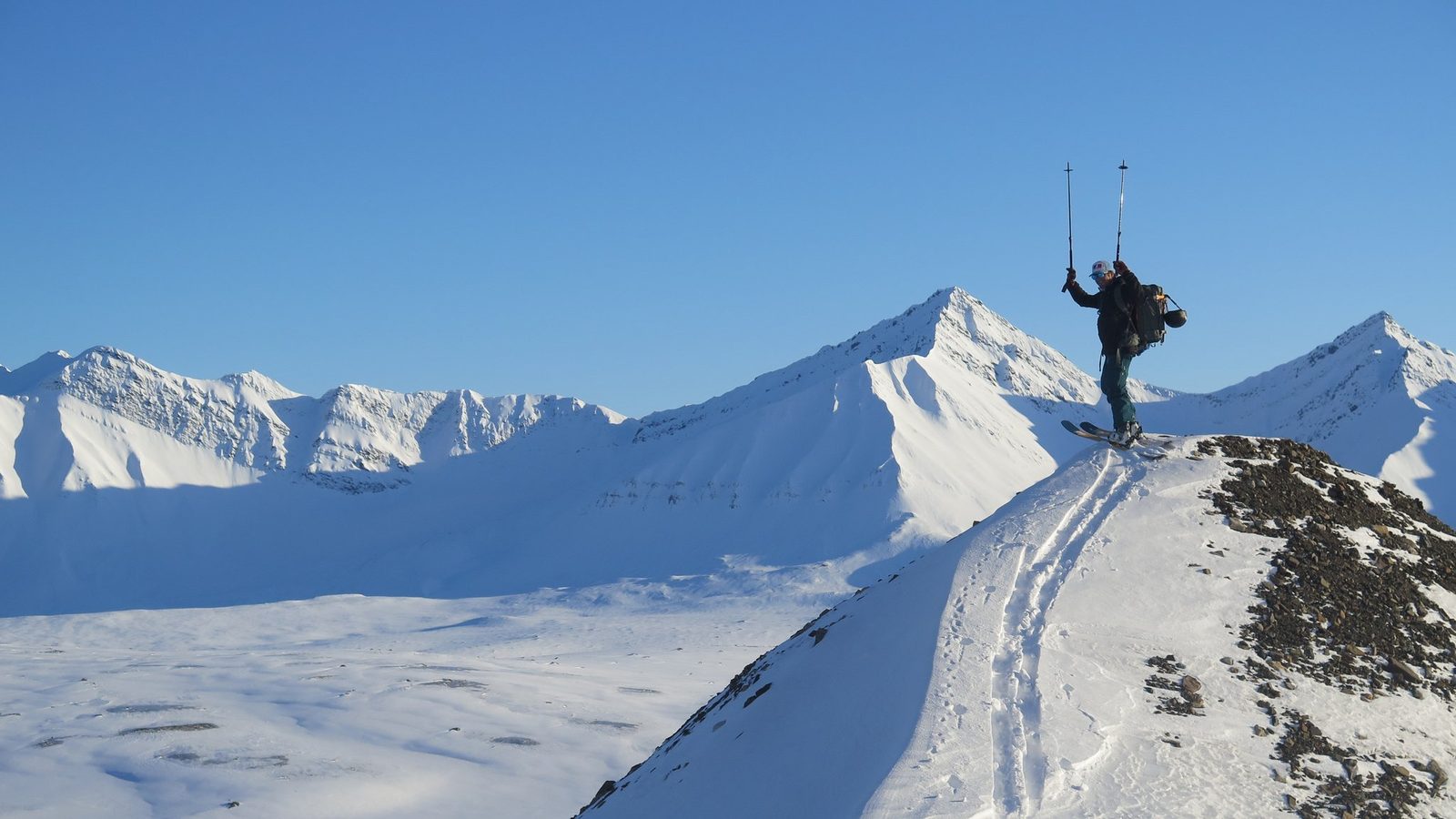
This is ski touring, and its freeride cousin, where the climb is the price of admission and the descent is entirely yours. A touring morning is measured in metres of vertical climbed — 800 to 1,200 is a normal effort before a single turn down. It rewards a particular kind of person: someone who likes the quiet of a skin track at dawn, who'd rather work for empty snow than queue for tracked-out snow. The freeride variant trims the walking and leans on the descent, but the principle holds. You go up under your own steam, you read the slope, you ski down what you've earned. Nothing beats it for the feeling of a summit that cost you something.
Off-piste, straight off the lift
Not every good day needs a long climb. Some of the best snow of the season sits a few metres beyond the last groomed run, reached on a chairlift and a short traverse — the fast way in.
This is lift-accessed off-piste, the freeride skiing that sits right beside the resort. Val-d'Isère does it as well as anywhere in the Alps; Niseko in Japan turns a gondola and a gate into a wall of dry powder. You save the climb, and on a big snow day that means more laps of fresh snow before it's tracked out. What you don't save is the reading of the slope. The lift drops you at the top; it's still your legs on the descent, your eye on the fall line, your judgement on whether that convex roll has loaded overnight. Off-piste beside the ropes is not controlled, not pisted, not safe by default — it's serious mountain skiing with a quick lift instead of a long walk. Worth saying plainly, because the ease of access is exactly what catches people out.
The ski-safari: crossing a range on skins
Then there's the trip that isn't a descent at all, but a journey. Instead of climbing and dropping the same valley, you cross a range point to point — a new col each day, a new face, a new hut or lodge at the end of it.
A ski-safari is travelling on skis. You link summits and valleys over several days, carrying what you need, sleeping somewhere different each night, and the descents are the reward strung between the climbs rather than the whole purpose of the day. The Lofoten islands do it with the sea always in view; the Austrian Alps do it hut to hut, a classic of the discipline. It asks real stamina and a taste for the going-somewhere of it — you're not lapping a hill, you're crossing country under your own power. For a lot of skiers this is the one that stays with them longest, because at the end of the week you've actually gone somewhere.
When a machine earns its place
Now the exception. A snowcat or a helicopter earns its keep only where it unlocks terrain your legs can't reach in a day — never as a shortcut around the effort, and never the default. Two very different machines, and the honest way to understand them is to compare them with each other.
Cat-skiing and heli-skiing: the comparison that holds
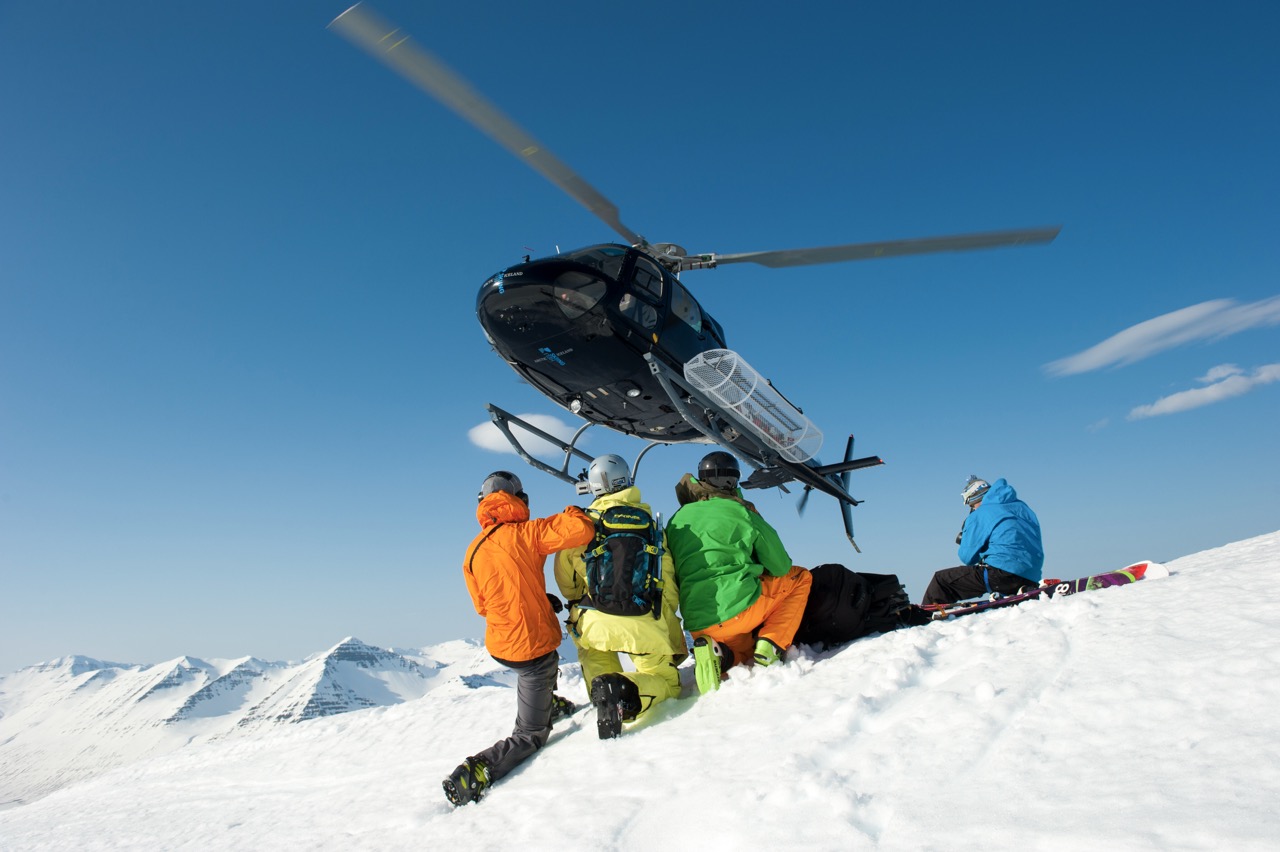
Set these two side by side and cat-skiing suddenly makes sense. A snowcat — a tracked machine with a heated cabin on the back — does the job of a chairlift where there is no chairlift. It grinds you up a forestry track or a broad ridge, drops you at the top, and picks you up at the bottom for the next lap. Cheaper than a helicopter, slower, weather-proof, and it strings together lap after lap of untracked snow in terrain that never had a lift. Heli-skiing does the same job faster and higher: the helicopter reaches summits and glaciers a snowcat can't, ground that's otherwise locked. Speed and reach against cost and patience — that's the real trade, and it's the only comparison that tells you anything. Neither is measured against ski touring, because they answer a different question: not "how do I earn the descent," but "how do I reach snow that has no other way in."
Iceland: the helicopter as a key, the descent on your own legs
Iceland is where the two ideas meet, and it's worth being precise about it. On the Troll Peninsula in the north, what we run is heli-assisted ski touring — not lift-style heli-skiing. One drop from a dropzone twenty minutes from the lodge puts you high on a summit; from there you often put the skins back on and tour to the line you actually want, then ski it. Descents fall toward the sea, some approaching 1,400 metres of vertical, on spring snow softening in the long northern light. Groups are small — four skiers, five at most — and the lodge is shared between two groups, so eight of you, ten at the outside. The season runs March into late May, with April and May the heart of it. The helicopter here is a key, nothing more. It opens a ridge you couldn't reach on foot in the time you have; the climbing and the descent are still skied the honest way. That's the whole point of the format, and it's why it reads as touring with a lift, not heli-skiing with a badge.
Choosing the mode that fits you
So which one is yours? Match it to three honest things: how well you ski off-piste, how fit you are for climbing, and how much you want to work for the descent. There's no wrong answer, only a right fit.
If you love the earning of it and you've the legs for a long climb, ski touring and the ski-safari are home. If your fitness lives on lift-served pistes but you ski off-piste well, lift-accessed off-piste in Val-d'Isère or Niseko gets you into wild snow without the long walk. If you want summits your legs can't reach in a day, that's where the snowcat and the helicopter earn their place — cat-skiing for value and weather-proofing, heli-assisted ski touring in Iceland when you want ocean-bound descents and are happy to skin from the drop. Not sure where you sit? That's exactly the conversation to have before you book. It helps to be honest about how good a skier you need to be for each one, and about what a ski adventure costs, before you choose — and then to tell us how you ski and let us match you.
The access modes, at a glance
A quick read on effort and reward. Match yourself to the line, then talk to us.
Ski touring / freeride · you climb every metre you ski · empty summits and first tracks, the purest way in.
Lift-accessed off-piste · a chairlift and a traverse · wild snow beside the resort, fast, still serious.
Ski-safari · days of climbing point to point · a journey across a whole range, not just a descent.
Cat-skiing · a snowcat does the lift's job · lap after lap of untracked snow, even when the cloud keeps the helicopter grounded.
Heli-assisted ski touring (Iceland) · one drop, then skins to the line · ocean-bound descents earned on your own legs.
Straight answers to the questions we get most
What's the difference between ski touring, freeride and heli-skiing?
Ski touring means you climb what you ski, on skins, under your own power — the descent is earned. Freeride leans on the descent and trims the climbing, whether you take a lift up or a short skin. Heli-skiing uses a helicopter to reach summits your legs can't, and is the exception, not the norm: on most of our trips you earn your turns. In Iceland, specifically, the helicopter only drops you high and you tour from there — that's heli-assisted ski touring, not lift-style heli-skiing.
Do I need a helicopter to ski real powder?
No — and this is the honest heart of it. The norm is to earn the descent on skins, and some of the best untracked snow of your life is a slow climb away, or a chairlift and a short traverse beside a resort. The helicopter and the snowcat exist for terrain that has no other key, not to buy powder you could reach with your own legs. Most skiers who come to us never touch a machine, and ski the finest snow of the trip.
Cat-skiing or heli-skiing — which should I choose?
They answer the same question — how to reach snow that never had a lift — at different price and pace. A snowcat is cheaper, slower and weather-proof, stringing together laps in forest and broad terrain. A helicopter is faster and reaches higher, unlocking summits and glaciers a snowcat can't, for more money. If value and reliable laps matter most, choose the cat; if reach and altitude matter most and the budget allows, choose the heli.
How do I know which mode suits me?
Weigh three things honestly: how well you ski off-piste, how fit you are for a long climb, and how much you want to earn the descent. Strong legs and a love of the work point to ski touring or a ski-safari; good off-piste skiing without the climbing fitness points to lift-accessed off-piste; wanting summits beyond a day's reach points to the snowcat or the helicopter. If you're unsure, tell us how and where you've skied and we'll point you to the right one — that's the conversation to have before you book.
A word from the founder I've spent more than twenty years watching people light up at the top of a climb they didn't think they had in them. That's why the norm here is to earn it — the descent means more when the summit cost you something. The helicopter and the snowcat have their place, on ground there's no other way to reach, and we use them honestly, as a key rather than a shortcut. If you're weighing up which mode fits you, that's the best possible reason to get in touch. Tell me how you ski and how you like to work for it, and I'll point you to the right one. — Boris Malesset, founder of PowderWeGo, an off-piste ski professional since 2001
Ready to find the way in that fits you? See all our adventure ski trips, or tell us how you ski and we'll match you.
For a closer look at the two modes where a machine earns its place, read our heli-assisted ski touring in Iceland: the Troll Peninsula, from summit to ocean, and the ski touring you can start with, explained simply.


Comments