
Reading avalanche risk, and knowing when to turn back

Snow doesn't take orders. You can't book good conditions the way you book a flight — you read what the mountain hands you that morning, and you decide. That decision is the real craft, and it runs the other way to what most people expect: the skill on the hill isn't pushing on, it's knowing when to stop. Managing avalanche risk off-piste is less about kit than about judgement, and the best day is sometimes the one where backcountry safety meant skiing a smaller line, or none at all. What follows is how that judgement actually gets made — the scale, the slope, the four in the pack, the moves on the way up, and the sense to turn round.
Five numbers, and what they leave out
Every morning in avalanche country starts the same way: with the forecast. In the Alps it's the BERA, in Scotland the SAIS bulletin, in the Arctic the national service — and they all speak the same language, the five-level European danger scale. One is low, two moderate, three considerable, four high, five very high. Learn to read it and you've learned the mood of the range for the day.
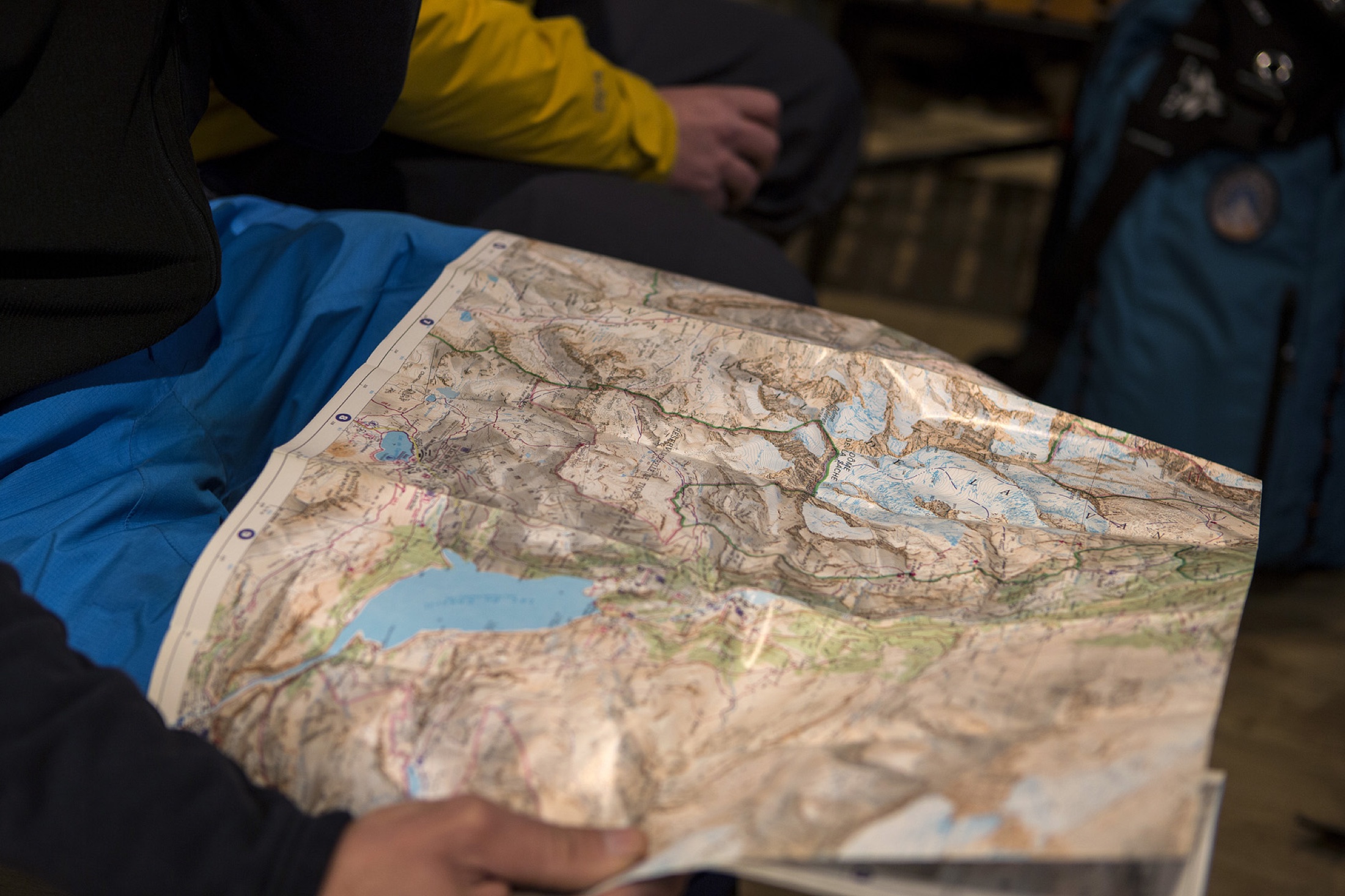
Here's the part the numbers don't tell you: the scale is not linear, and it is not a slope-by-slope verdict. The step from two to three is a jump in likelihood, not a single notch — most accidents happen at considerable (3), precisely because the snow looks willing and the day looks fine. And a forecast covers a whole region; it's an average across valleys and aspects, not a reading of the pitch under your skis. It tells you where to be suspicious and which problem to watch — a wind slab on the lee side, a persistent weak layer buried on shaded aspects, wet snow in the spring afternoon. The European avalanche services publish it in plain language; the EAWS danger scale is worth reading in full once, slowly, off the hill. Then you go and check it against what's actually there.
Thirty degrees, and where the slab hides
Slab avalanches are a terrain problem before they're a snow problem. The threshold every tourer carries in their head is 30 degrees: below it, a slab almost never releases; above it, it can. The danger climbs steeply from there, sharpest between about 35 and 45 degrees — right where the good skiing is. It's no accident that the pitch we come for is the pitch that slides.
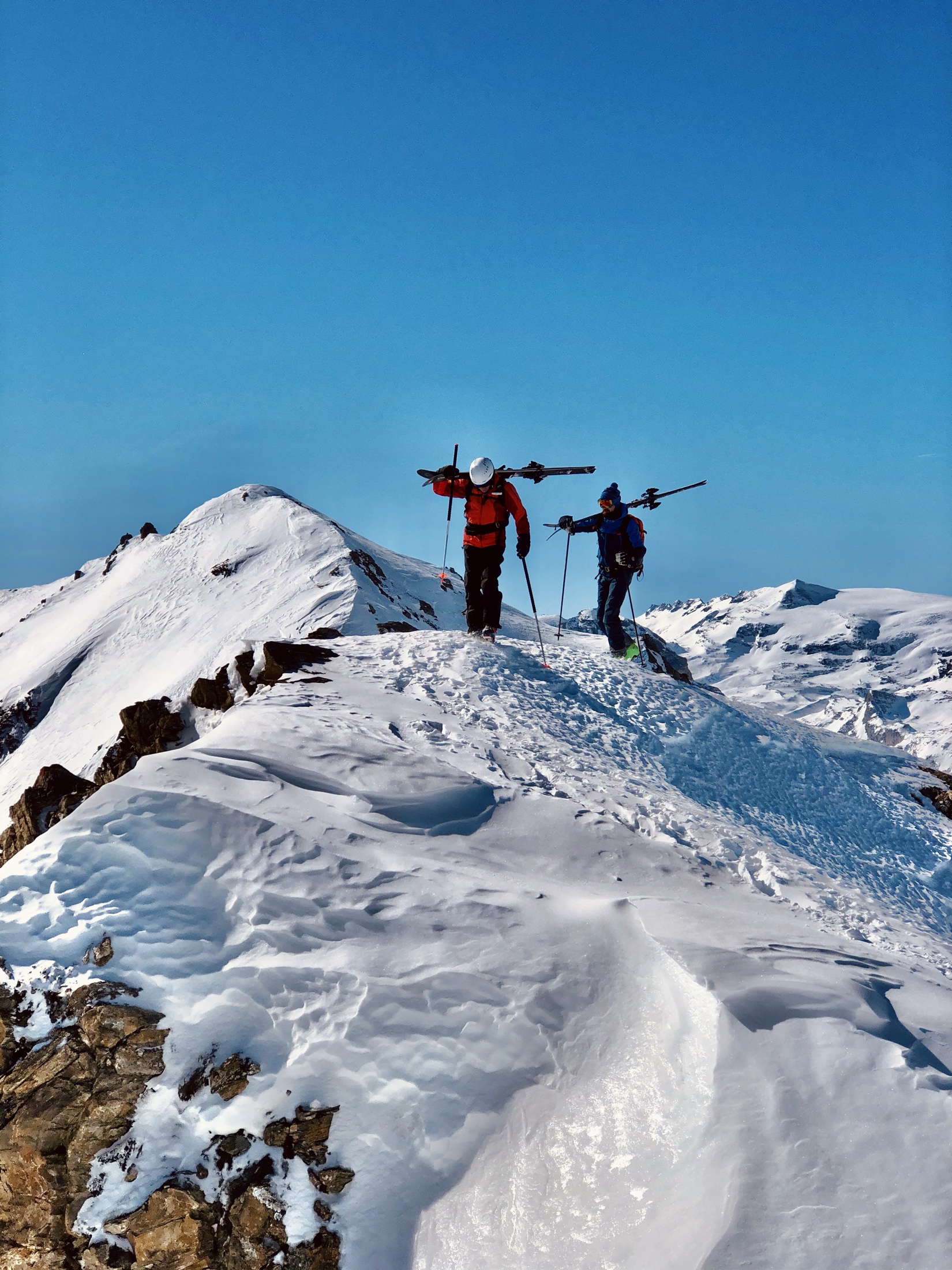
The thirty-degree rule is a floor, not a guarantee. Wet spring snow, heavy for its own strength, can let go on ground as gentle as fifteen degrees. So you read the terrain as well as the angle: convex rolls where the snowpack is stretched thin, gullies that funnel a small slide into a big consequence, lee slopes where the wind has quietly built a wind slab while you slept. Aspect and altitude do the rest of the sorting — a face bare and safe from the road may be loaded and touchy a headland round. The Scottish service frames this decision-making well for hill users; their Be Avalanche Aware approach is the plainest terrain-and-forecast checklist in the English language. Read the aspect, read the angle, and most of the danger sorts itself before you've committed to anything.
Airbag, transceiver, shovel, probe — and the fifteen minutes that matter
Four items are not optional, ever, on avalanche terrain: an airbag pack, a transceiver (a beacon) on your body, a shovel and a probe in your pack. The airbag helps keep you on the surface as the slide runs; the other three are there for the minutes after it stops. None of it stops a slide — all of it changes what happens next.
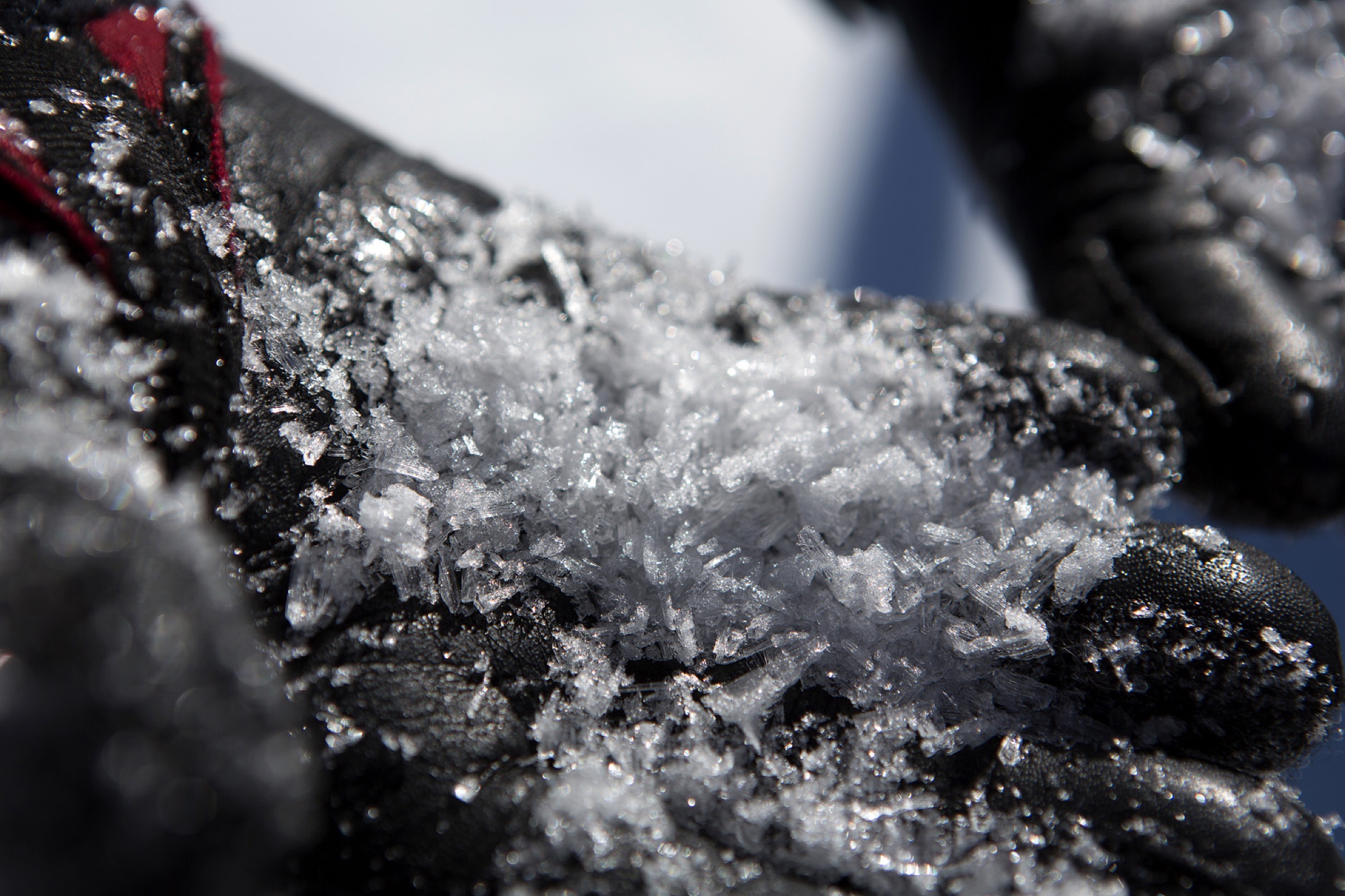
The reason the kit is non-negotiable is a hard number: a buried person's chances fall off a cliff after roughly fifteen minutes under the snow. No rescue team reaches you inside that window in the backcountry — the people who dig you out are the ones you skied up with. That's companion rescue, and it's the whole logic of a small, equipped, practised group. Carrying a transceiver you've never searched with is theatre; the drill has to be in the hands, not the manual. On our trips every skier is given an airbag pack, transceiver, shovel and probe — the full four — and the morning starts by checking them and running a search — not because the day is dangerous, but because that's how you keep it acceptably safe.
On the skin track: spaced out, one at a time
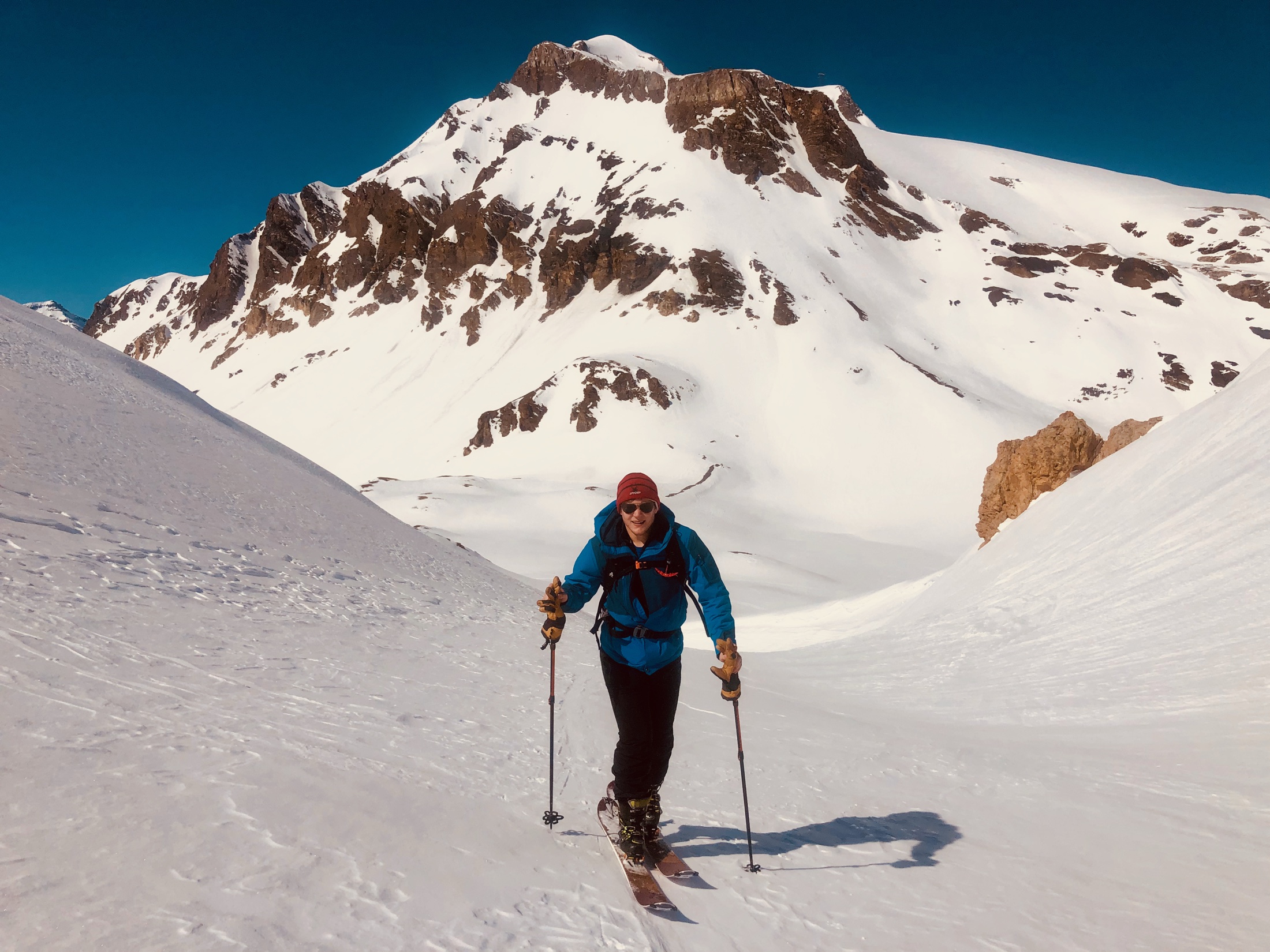
The forecast is read, the kit is on. Now the day is managed by how the group moves. On anything doubtful, you go one at a time — up and down — so a slope only ever carries one person's weight and one person is ever exposed. On the climb, you space out on the skin track, leaving a gap between skiers so a single trigger doesn't take the whole party.
The way up is also where you gather the day's evidence. You dig — a quick pit, a hand shear, a compression test — to see how the layers are bonded and whether that buried weak layer is real today or yesterday's worry. You listen, and you take the mountain at its word: a hollow whumpf underfoot, a crack shooting out ahead of your ski, a fresh slide on a slope of the same aspect. Those are not ambiguous. They are the snowpack telling you, in plain terms, that it is willing to move — and the honest answer is to change the plan.
The morning you don't go
Every good day is built on a decision made before it starts, and the hardest one to make well is the decision to turn round. The mountain professional running a trip isn't the one who gets a group down every objective — it's the one who reads the forecast at breakfast, watches the sky and the snow, and quietly swaps the big line for a smaller one, or calls the whole thing at the col. A summit fewer beats a decision too many. Every time.
That's exactly how our trips run. On the heli-assisted ski touring in Iceland's Tröllaskagi, the day is read fresh each morning against the Icelandic Met Office avalanche service, and the programme moves with the snow — the drop shifts, the aspect changes, sometimes the flight waits. It never comes with a promise of the same summits every day, because no honest operation can give you that. What it comes with is the judgement to know which slope holds and which one doesn't, and the willingness to say no on the good days as readily as the bad. Turning back isn't the trip failing. Most days, it's the trip working.
In short
The five-level European scale sets the mood of the range; it's a regional average, not a slope-by-slope verdict — most accidents happen at considerable (3).
Slab avalanches release mainly above 30 degrees, sharpest between 35 and 45; read convex rolls, lee slopes, gullies and aspect, not just the angle.
Transceiver, shovel and probe on every skier, non-negotiable — a buried person's odds fall sharply after about fifteen minutes, and companion rescue is the only rescue that's fast enough.
Move one at a time on doubtful ground, space out on the skin track, dig to read the layers, and believe the whumpfs and cracks.
The finest skill is turning back in time. A smaller line, or none, is the right call long before it's a disappointment.
A few honest questions
Do you need a transceiver to ski off-piste? Yes — an airbag pack, transceiver, shovel and probe are the baseline the moment you leave patrolled runs; the four go together. Carrying them isn't enough, though: you have to have searched with them until the drill is automatic. On our trips the kit is provided and checked every morning, and we run a search before we climb.
At what slope angle does avalanche risk climb? Around 30 degrees. Below that, slabs almost never release; above it they can, with the danger sharpest between 35 and 45 degrees — the same pitch that skis best. Wet spring snow is the exception and can slide on ground as gentle as fifteen degrees, so the angle is a guide, never a promise.
Is the avalanche forecast enough on its own? No. The forecast frames the day — it names the danger level and the problem to watch — but it's a regional average, not a reading of the slope you're standing on. You still check aspect, angle and the snow underfoot, dig where it matters, and adjust as you climb.
Can you ski safely at level 3 (considerable)? You can ski at considerable — a great many good days are level 3 — but you ski it differently: gentler aspects, careful terrain choice, tighter spacing, and a low bar for backing off. It's never zero risk. It's risk read, kept small, and sometimes declined.
The founder's note
The runs I remember clearest aren't always the ones we skied. There's a morning in the north I still think about — a face we'd come a long way for, loaded overnight, the snow giving that dull, heavy note underfoot that you learn to trust more than any forecast. We turned round at the col and skied something half the size in the trees, and nobody said much. That quiet is the sound of a good decision. You don't get a story out of it. You get everyone home. Boris Malesset, founder of PowderWeGo — off-piste ski professional since 2001.
Ski with people who read the day → Tell us where and how you ski, and we'll build a trip around real conditions and honest calls: start a conversation. See where we go on our ski-adventure trips, or how it works morning to morning on heli-assisted ski touring in Iceland.
If you're weighing whether the ground is for you, read our straight take on the level a ski-adventure trip really asks and when to head to the far north, month by month.


Comments