
Ski touring holidays for beginners: learn in Val d’Isère, then head north

The best ski touring holidays for beginners often start closer to home than you might think. A few days in Val d’Isère are enough to lay the foundations: fitting your skins, finding your pace on the climb, skiing natural snow with confidence. Then the big trips open up: the Lofoten Islands in March, Iceland’s Troll Peninsula in spring, Hokkaido powder in the depths of winter.
What a first trip asks of you
A ski touring trip is lived in a small group, with several climbs on skins each day and descents through snow nobody has groomed. The level comes down to two things: ease and stamina. For Lofoten, our trip page sums it up simply, with skiing ability at 3 out of 5 and fitness at 3 out of 5.
Ease means linking turns off-piste in changing snow, from powder to spring corn. Stamina means setting off again after the break with a smile still on your face. Both can be trained, and Val d’Isère makes a superb training ground: lifts to multiply the descents, side valleys a few minutes away on skins, and snow that lasts all winter.
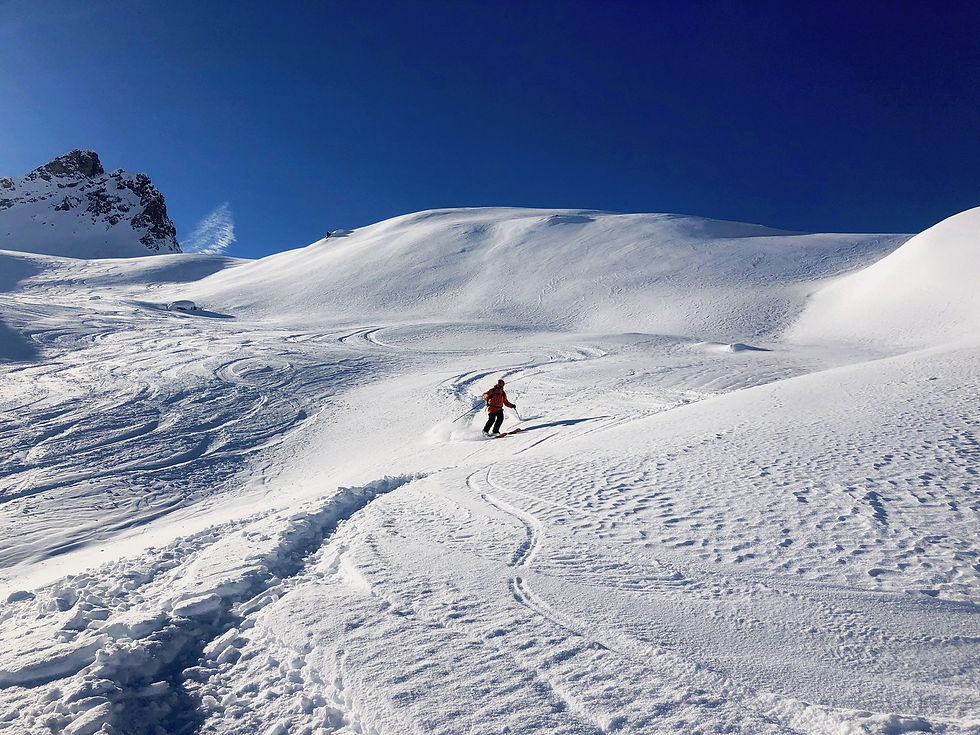
Three steps in Val d’Isère
Off-piste snow first. A day or more of private ski lessons in Val d’Isère is often enough to feel at ease in powder and crust. The instructor shapes each run around your skiing.
Then the climb on skins. On our ski touring course in Val d’Isère you work on the moves you will repeat every day on a trip: putting skins on and taking them off, setting your bindings, linking kick turns, pacing yourself on a long climb.
Safety, always. On every outing you carry an avalanche airbag pack, transceiver, shovel and probe. The school’s avalanche and off-piste page explains how to read the risk, and avalanche services publish a daily danger level on the European avalanche danger scale, from 1 to 5. (The school pages are in French for now.)
Lofoten, a first ski touring trip
Lofoten makes a lovely first trip. The season runs from March to April, the base is Svolvær on the island of Austvågøy, and you ski six to a guide, from the summits down to the sea. Most mornings the track leaves from the shore, climbs through birch trees, then reaches the ridges. Our ski touring in Norway page has all the details, including the 13–20 March 2027 departure.

Iceland, where the helicopter drops you at the start of the tour
On the Troll Peninsula, north of Akureyri, skiing in Iceland means heli-assisted touring, from March to June. The helicopter drops you on a ridge in the morning, then the day carries on under your own steam, from a col to a face, before the run down towards the fjord. It is a gentle way into touring, with the first climb taken care of. If you dream of lap after lap from the helicopter all day, our heli skiing page has the trips, with prices on request.
Japan and further afield
Once the basics are in place, a Japan ski trip takes you to Hokkaido, tree skiing in light, dry powder. Our touring ideas are gathered on the ski touring page, and every destination on our ski touring holidays page.
Who skis with you
In Val d’Isère and on every trip, a qualified BEES ski instructor specialising in off-piste and/or an UIAGM mountain guide. PowderWeGo’s founder, Boris Malesset, has been a professional off-piste skier since 2001; based in Val d’Isère since 2005, he opened the school there in 2022. The resort’s tourist office, valdisere.com, covers getting there and where to stay.
Tell us when you would like to travel, how many of you there are and your current level, and we will reply within 24 hours.
Questions we are often asked
Can you join a ski touring trip if you are new to skins?
Yes, if you already ski confidently off-piste. Skinning is quick to learn; a course or a few days in Val d’Isère before you leave give you the right moves and the confidence that goes with them.
What level do you need for a first ski touring holiday?
For Lofoten, we ask for skiing at 3 out of 5 and fitness at 3 out of 5: a good skier, comfortable in varied snow and happy to climb day after day.
What safety kit do you need?
An avalanche airbag pack, transceiver, shovel and probe, on every outing, in Val d’Isère and on every trip.
Who guides?
A qualified BEES ski instructor specialising in off-piste and/or an UIAGM mountain guide.


Comments